
The Relentless Power of Objective Reality
In an era dominated by echo chambers, digital algorithms, and customized information feeds, distinguishing between personal conviction and objective truth has never been more critical. This dilemma lies at the heart of one of the 21st century's most iconic scientific maxims, popularized by astrophysicist Neil deGrasse Tyson: "The good thing about science is that it's true whether or not you believe in it."
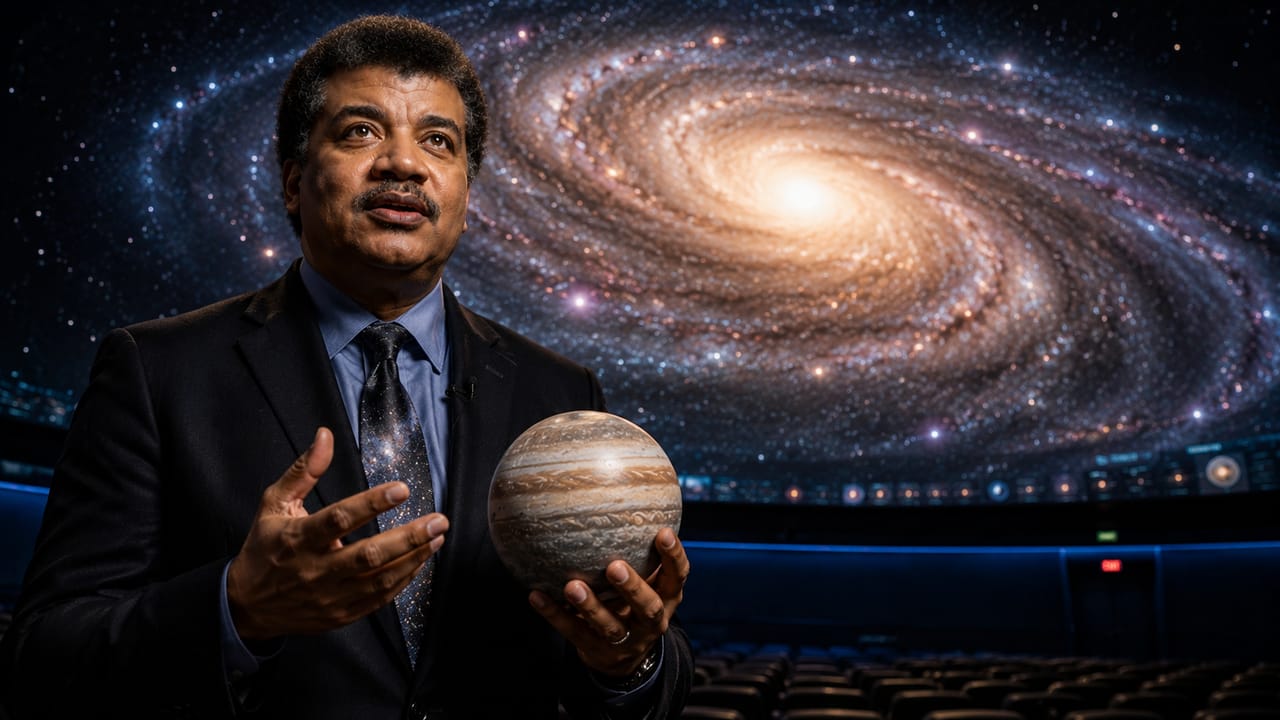
At first glance, the quote sounds like a witty, slightly provocative one-liner. But peel back the layers, and you find a profound philosophical truth about the universe: reality is entirely indifferent to human emotions, political alignments, or personal beliefs. Whether you believe in the law of gravity or not, dropping a glass will result in it falling to the floor. The Earth will continue its orbit around the Sun regardless of whether any human mind contemplates it.
Also Read: Science Breakthroughs & Innovations Quiz: This Week's Discoveries
Who is Neil deGrasse Tyson?
To fully appreciate the weight of the quote, one must understand the man behind it. Neil deGrasse Tyson is an American astrophysicist, author, and one of the world's most recognizable science communicators. Serving as the director of the Hayden Planetarium at the American Museum of Natural History in New York City, Tyson has dedicated his life to making the complex wonders of the cosmos accessible to the general public.
Stepping into the giant shoes of his mentor and legendary science communicator Carl Sagan, Tyson hosted the critically acclaimed 2014 television series Cosmos: A Spacetime Odyssey—a modern continuation of Sagan's original 1980 masterpiece. Known for his blunt, enthusiastic, and often humorous style, Tyson has never shied away from defending empirical evidence. He is famously remembered for his role in the official reclassification of Pluto from a primary planet to a dwarf planet, a move that sparked global debate but stood firm on scientific classification standards.
Also Read: Alzheimer's Microglia Reprogramming Study: Take the Quiz
Understanding Truth: Beliefs vs. Scientific Facts
A common point of confusion in modern discourse is the conflation of subjective belief with objective reality. Tyson's quote serves as a clear dividing line between these concepts. To understand how science separates itself from opinion, let's look at the different categories of "truth" that shape human understanding:
| Category | Definition | Subject to Human Belief? | Example |
|---|---|---|---|
| Subjective Opinion | Personal tastes, preferences, or values that vary from person to person. | Yes (Entirely dependent on the individual) | "This movie is the greatest film ever made." |
| Scientific Hypothesis | A proposed, testable explanation for a phenomenon that requires rigorous validation. | Yes (Remains unproven until verified) | "A specific compound in green tea may slow cellular aging." |
| Objective Scientific Fact | An empirically verified truth confirmed through rigorous, repeated observation and peer review. | No (Remains true regardless of belief) | "The Earth rotates on its axis once approximately every 24 hours." |
The Self-Correcting Nature of Science
Critically, Tyson's defense of scientific truth is not a claim of scientific infallibility. Critics of science often argue, "But science changes its mind all the time! How can it be objective truth?"
This objection misses the fundamental beauty of the scientific method. Science is not a static holy book of unchanging dogmas; it is a systematic process of inquiry. When new, superior evidence comes to light, scientific consensus updates to reflect reality more accurately. Science changes its mind because reality remains constant, while our understanding of it gradually improves. Far from being arrogant, Tyson's quote represents ultimate humility: it acknowledges that human beliefs do not dictate cosmic laws; rather, humans must adapt their beliefs to align with empirical observations.
Why the Quote Matters in the Digital Age
Today, we face what many call an "infodemic." With algorithms serving us content tailored precisely to our existing biases, it is incredibly easy to treat reality like an all-you-can-eat buffet—selecting the "facts" we find comfortable and discarding those that challenge our worldview. Tyson's quote acts as a cold shower for this habit. Disbelief is not a shield against reality. Refusing to believe in climate change, viral transmission, or systemic physical laws does not neutralize their impact. Reality does not require your permission to function.
How to Cultivate a Scientific Mindset
Applying this philosophy in everyday life doesn't require an advanced degree in astrophysics. It simply requires a commitment to intellectual honesty. Here are some key strategies to adopt:
- Prioritize Evidence Over Preference: Before forming a rigid opinion, ask yourself: What does the empirical data show? separating what you want to be true from what is true.
- View Correction as an Upgrade: When proven wrong by credible evidence, do not view it as a defeat. Treat it as a system upgrade for your brain.
- Distinguish Dislike from Disproof: Just because a scientific fact is inconvenient or makes you uncomfortable does not make it false. Do not confuse emotional discomfort with intellectual refutation.
- Evaluate the Weight of Consensus: Understand the difference between an isolated study on social media and a broad, peer-reviewed scientific consensus. Trust systems that have been rigorously tested across the globe.
Interactive Knowledge Check: Test Your Understanding!
Think you understand the mechanics of scientific truth, astrophysics, and Neil deGrasse Tyson's philosophy? Take our 10-question MCQ quiz below to test your skills!
Start Quizzes [MCQs]
REPORT CARD
ATTEMPTED QUESTIONS: 0CORRECT ANSWERS: 0
WRONG ANSWERS: 0
PRACTICE REGULARLY!
Frequently Asked Questions
What is Neil deGrasse Tyson's famous quote about science?
Neil deGrasse Tyson's famous quote is: 'The good thing about science is that it's true whether or not you believe in it.'
Who is Neil deGrasse Tyson?
Neil deGrasse Tyson is an American astrophysicist, author, science communicator, and the director of the Hayden Planetarium in New York City.
What does 'reality is indifferent to feelings' mean?
It means physical laws and natural facts do not change or bend to accommodate human beliefs, desires, political views, or emotions.