
A Paradigm Shift in Alzheimer's Treatment: Reprogramming the Brain's Defenses
For decades, Alzheimer's disease research has primarily focused on clearing toxic protein buildups, particularly beta-amyloid plaques, from the brain using external agents such as monoclonal antibodies. However, a groundbreaking collaborative study by researchers in Spain and Switzerland has unveiled a revolutionary alternative: restoring the brain's innate immune system to do the heavy lifting itself.
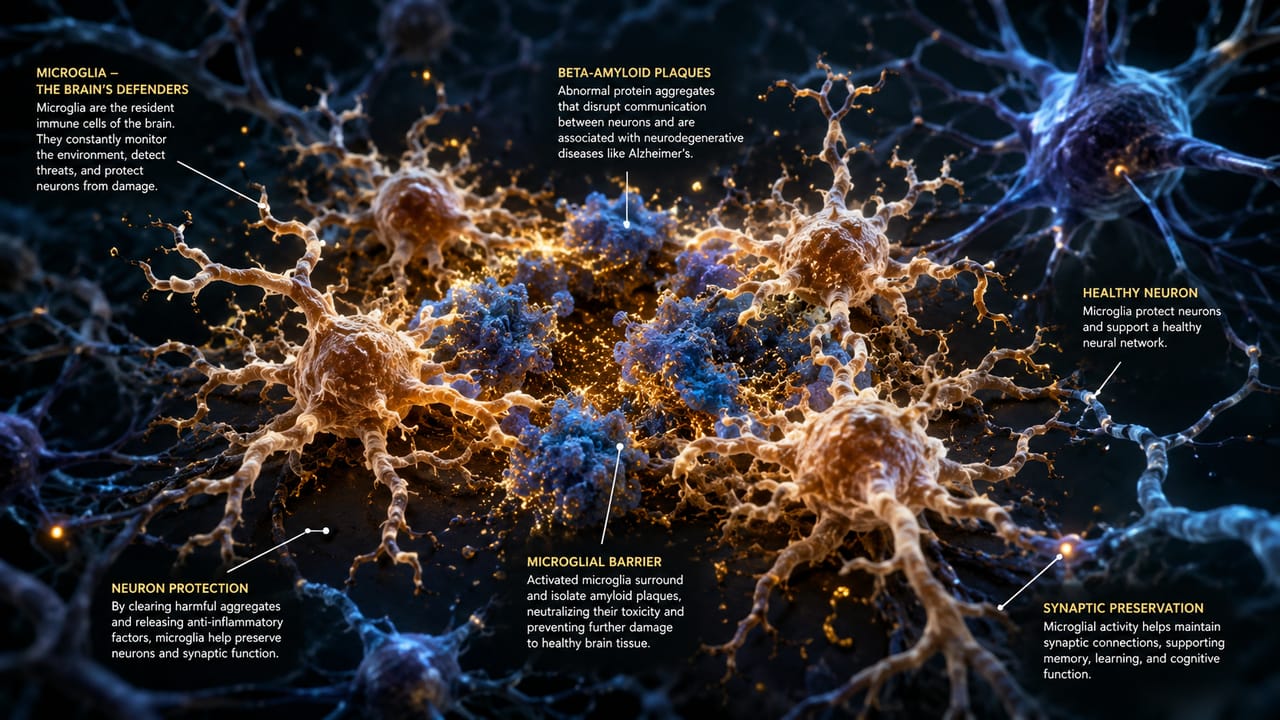
By utilizing an experimental molecule called OLE, scientists have successfully "reprogrammed" microglia—the brain's resident immune cells—reversing their disease-induced impairment and restoring their natural protective capabilities. This approach offers a promising new avenue for therapeutic development, targeting the root cellular failures that allow neurodegenerative diseases to flourish.
Understanding Microglia: The Double-Edged Swords of Brain Health
Microglia are specialized immune cells that act as the primary defense mechanism in the central nervous system. In a healthy brain, these cells constantly patrol their environment, clearing metabolic waste, dead cells, and early-stage protein aggregates through a process called phagocytosis.
However, during the progression of Alzheimer's disease, the persistent accumulation of beta-amyloid plaques overwhelms these defenses. Over time, microglia experience cellular exhaustion and functional decline, shifting from a protective state into a dysfunctional, chronically inflammatory state. Instead of clearing the harmful plaques, they begin contributing to sustained neuroinflammation, ultimately accelerating the damage to surrounding healthy neurons.
How the OLE Molecule Restores Balance
Derived from the PM20D1 gene, the OLE molecule acts as a biochemical molecular switch. When administered in experimental models, OLE reprograms dysfunctional microglia back into their protective active state. Once rejuvenated, these cells migrate toward toxic beta-amyloid deposits, forming a tight physical barrier around them. This barrier isolates the toxic plaques, preventing them from coming into direct contact with neighboring neurons and significantly neutralizing their destructive cellular effects.
Comparing Therapeutic Approaches to Alzheimer's Disease
To understand the clinical significance of this breakthrough, it is useful to compare how this cellular reprogramming method stack up against conventional therapeutic strategies currently in use or under development.
| Feature | Traditional Monoclonal Antibodies (e.g., Lecanemab) | OLE Molecule (Microglia Reprogramming) |
|---|---|---|
| Primary Target | Direct binding to beta-amyloid plaques. | Innate immune cells (Microglia). |
| Mechanism of Action | Artificially marks and dissolves existing plaques. | Restores natural immune clearing and protective barrier formation. |
| Cellular Health Impact | Primarily extracellular clearance. | Promotes cell survival and reduces direct neuronal toxicity. |
| Production Origin | Synthetic laboratory-engineered antibodies. | Produced naturally by the PM20D1 gene. |
| Safety & Delivery | Risk of infusion reactions and amyloid-related imaging abnormalities (ARIA). | Aims to leverage endogenous pathways, potentially reducing side effects. |
Rigorous Multi-Model Testing: Worms, Mice, and In Vitro Cell Cultures
The research, published in the prestigious journal Cell Death and Disease, was led by Dr. Jose Vicente Sanchez Mut from the Institute for Neurosciences (IN)—a joint center of the Spanish National Research Council (CSIC) and Miguel Hernandez University of Elche (UMH)—alongside Dr. Johannes Graff of the École Polytechnique Fédérale de Lausanne (EPFL).
To rigorously evaluate the therapeutic potential of OLE, the research team implemented a comprehensive, multi-tiered experimental pipeline:
- Invertebrate Models (C. elegans): Researchers first tested OLE on genetically modified roundworms engineered to produce human beta-amyloid. Because of their short lifespans, these worms are ideal for rapid toxicity screening. OLE treatment significantly reduced protein aggregation and restored normal physical movement in the subjects.
- Mammalian Models (Mice): The researchers then transitioned to transgenic mouse models of Alzheimer's. Over a three-month treatment regimen, mice treated with OLE showed a profound reduction in amyloid plaque load. More importantly, these mice demonstrated significantly improved performance in spatial and recognition memory tests compared to untreated controls.
- In Vitro Human Cell Cultures: To study the direct cellular interactions, the team utilized advanced single-cell analysis on cultured microglia and neurons. The results confirmed that microglia responded most robustly to the compound, showing enhanced migration toward plaques and actively promoting neuronal survival under conditions designed to mimic severe neurodegeneration.
"Single-cell analysis allowed us to determine that microglia were the cells that responded most strongly to the treatment," explained Victoria Pozzi, the study's first author. "From there, we observed that the compound helped these cells move toward beta-amyloid plaques and better contain the damage associated with the disease."
The Road Ahead: Patents and Translational Medicine
With two European patents already secured—including one held directly by the CSIC—the research team is moving quickly toward translating these lab-based discoveries into clinical-grade therapeutics. While human clinical trials are still on the horizon, the ability to reprogram the brain's internal defense system represents a monumental milestone in the global fight against Alzheimer's disease.
Interactive Study Quiz:
Think you have mastered the details of this revolutionary scientific breakthrough? Test your understanding with our 10-question quiz below!
REPORT CARD
ATTEMPTED QUESTIONS: 0CORRECT ANSWERS: 0
WRONG ANSWERS: 0
PRACTICE REGULARLY!
Frequently Asked Questions
What is the OLE molecule and how does it relate to Alzheimer's?
The OLE molecule is an experimental compound produced by the PM20D1 gene. In Alzheimer's disease models, it has been shown to reprogram the brain's immune cells (microglia), restoring their ability to clear and contain toxic beta-amyloid plaques.
How does reprogramming microglia help fight Alzheimer's disease?
In Alzheimer's patients, microglia eventually become dysfunctional and fail to clear toxic plaques. Reprogramming them with OLE restores their natural protective mechanisms, allowing them to wrap around plaques and shield nearby neurons from damage.
What did the animal testing reveal about OLE?
Testing on genetically modified worms showed reduced protein buildup and improved movement. In mouse models, a three-month treatment of OLE led to a reduction in beta-amyloid plaques and significantly improved memory test scores.
Are there patents for the OLE treatment?
Yes, the translational findings of this study are protected by two European patents, including one owned by the Spanish National Research Council (CSIC), paving the way for future clinical developments.