
NASA's Nancy Grace Roman Space Telescope: A New Era of Cosmic Discovery
Humanity stands on the precipice of a new era of cosmic exploration with the impending launch of NASA's Nancy Grace Roman Space Telescope. Scheduled to embark on its pioneering journey from the Kennedy Space Center in Florida on August 30, this revolutionary instrument promises to transform our understanding of the universe, offering unprecedented insights into distant worlds, countless stars, and billions of galaxies.
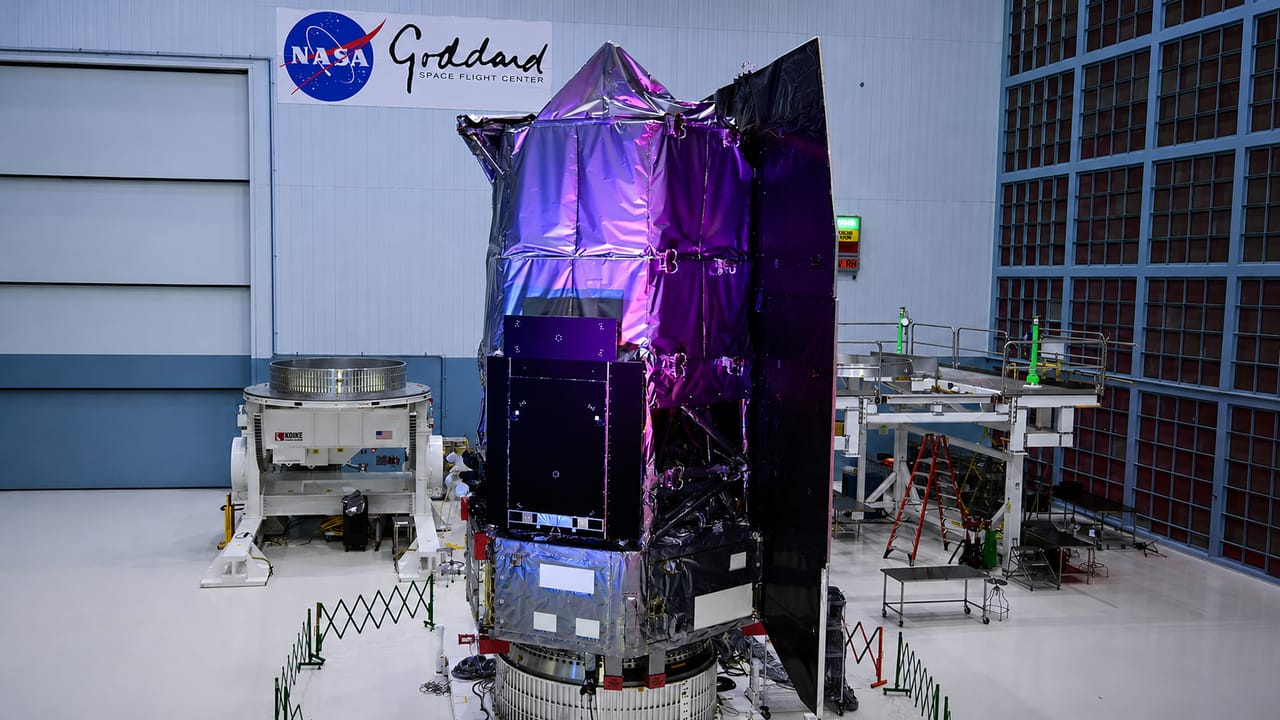
Named in honor of NASA's first chief of astronomy, the Roman Space Telescope represents a significant leap forward in our quest to unravel the universe's most profound mysteries.
The Legacy of Nancy Grace Roman: Mother of Hubble
The telescope's namesake, Dr. Nancy Grace Roman (1925-2018), was a visionary astronomer whose indelible contributions laid the groundwork for modern space-based astronomy. As NASA's first Chief of Astronomy in the 1960s and 1970s, she was instrumental in shaping the agency's space astronomy program. Her relentless advocacy and strategic planning were crucial in developing the Hubble Space Telescope project, earning her the moniker 'Mother of Hubble.'
Her work ensured that astronomers had access to orbital observatories, free from the distortions of Earth's atmosphere, profoundly impacting our ability to observe the cosmos. Renaming the Wide Field InfraRed Survey Telescope (WFIRST) in her honor in 2020 was a fitting tribute to a pioneer who championed the very idea of advanced space telescopes.
Also Read: Titan: The Ultimate Space Outpost? NASA Scientist Explains
A Glimpse into Roman's Revolutionary Capabilities
The Nancy Grace Roman Space Telescope is a wide-field infrared observatory, a design choice that confers several distinct advantages. Infrared light can penetrate cosmic dust clouds that obscure visible light, allowing Roman to peer into previously hidden regions of star formation and the very early universe. Its wide-field capability is particularly groundbreaking, offering a field of view at least 100 times larger than that of the iconic Hubble Space Telescope. This means it can capture vast swathes of the sky in a single observation, making it exceptionally efficient for large-scale surveys.
Scientists and engineers have dedicated two decades to the development of this sophisticated instrument, with NASA officially adopting it as a project in 2010. Following its completion in December, the telescope currently resides at NASA’s Goddard Space Flight Center in Greenbelt, Maryland, undergoing rigorous testing. With an investment exceeding $4.3 billion, Roman is poised to deliver a wealth of data that could fundamentally alter our cosmological models.
Roman, Hubble, and Webb: A Trio of Cosmic Explorers
The Roman Space Telescope will join a prestigious lineage of NASA's orbital observatories, complementing the unparalleled capabilities of the Hubble Space Telescope and the James Webb Space Telescope (JWST). While Hubble excels in visible and ultraviolet light, and JWST specializes in high-resolution infrared imaging of specific targets, Roman's strength lies in its expansive field of view in the infrared spectrum. This synergy allows for a comprehensive approach to celestial observation, covering a broader range of wavelengths and observational scales.
Also Read: Astronaut's Aurora View: A Space Spectacle
| Feature | Hubble Space Telescope (HST) | James Webb Space Telescope (JWST) | Nancy Grace Roman Space Telescope (NGRST) |
|---|---|---|---|
| Launch Year | 1990 | 2021 | 2026 (Scheduled) |
| Primary Wavelengths | Visible, Ultraviolet, Near-Infrared | Infrared | Wide-Field Infrared |
| Primary Mission | General Astronomy, Deep Space Imaging, Exoplanet Characterization | First Galaxies, Star & Planet Formation, Exoplanet Atmospheres | Dark Energy, Exoplanet Surveys (Microlensing), 3D Map of Universe |
| Field of View (vs. Hubble) | Reference (Standard) | Smaller than Hubble for deep fields | At least 100 times larger |
| Operational Speed (vs. Hubble) | Reference (Standard) | N/A (different mission profile) | Up to 1,000 times faster |
Ambitious Core Community Surveys
During its initial five-year mission, the Roman Space Telescope will undertake a series of ambitious Core Community Surveys (CCS), designed to provide foundational data for a generation of astronomical research. These surveys will focus on several key areas:
| Survey Type | Duration / Target | Primary Scientific Objective |
|---|---|---|
| Exoplanet Microlensing Survey | Observations every 15 minutes for over a year (Galactic Bulge) | Discover over 100,000 distant worlds, including rogue planets and isolated black holes, using gravitational microlensing. |
| Large-Scale Galaxy Survey | Approximately 17 months, documenting hundreds of millions of galaxies | Create a 3D map of the universe using spectroscopy, investigate dark matter and dark energy, and the expansion of the universe. |
| Variable Objects & Supernovae Survey | Observe one specific region every five days for two years | Study objects that change over time, like exploding stars (supernovae), to refine measurements of cosmic distances and the universe's expansion rate. |
| Primordial Black Hole Hunt | Throughout various surveys | Search for elusive primordial black holes, which are theorized to be comparatively small and have previously evaded detection. |
Senior project scientist Julia McEnery projects that in its first five years, Roman is expected to unveil over 100,000 distant worlds, discover hundreds of millions of stars, and image billions of galaxies. This unprecedented volume of data will fuel countless scientific investigations for decades to come.
Preparation and Launch
The Roman telescope has undergone extensive evaluation under NASA's Independent Verification and Validation (IV&V) Program. This program ensures rigorous engineering methodologies are applied to assess the project's strength, longevity, and potential risks, a critical step for missions of this complexity and cost.
Soon, the telescope will be carefully transported on NASA's Pegasus Barge from Maryland to the Kennedy Space Center in Florida. There, it will undergo final inspections at the Payload Hazardous Servicing Facility, followed by powered testing and comprehensive launch rehearsals to ensure every system is go for its August 30 liftoff. Dominic Benford, a program scientist at NASA headquarters, anticipates that the first captivating images from the Roman telescope could be released to the public by the end of 2026, marking a monumental moment for astronomy.
The Future of Space Exploration
The Nancy Grace Roman Space Telescope embodies humanity's enduring curiosity and relentless pursuit of knowledge about the cosmos. Building on the foundational work of observatories like Hubble and working in concert with new instruments like JWST and SPHEREx (launched in 2025 for a widespread infrared spectral survey), Roman will push the boundaries of discovery. It promises to reveal the subtle tug of dark energy, chart the distribution of mysterious dark matter, and uncover a multitude of exoplanets, offering a truly 3D perspective of our universe. The data gathered will not only answer existing questions but undoubtedly pose new ones, inspiring generations of scientists and dreamers to look up and ponder the infinite wonders above.
Test Your Knowledge: Nancy Grace Roman Space Telescope
Start Quizzes [MCQs]
REPORT CARD
ATTEMPTED QUESTIONS: 0CORRECT ANSWERS: 0
WRONG ANSWERS: 0
PRACTICE REGULARLY!
Frequently Asked Questions
What is the Nancy Grace Roman Space Telescope's main mission?
The Roman Space Telescope's main mission is to investigate long-standing astronomical mysteries such as the force behind the universe's expansion (dark energy), search for distant planets beyond our solar system using gravitational microlensing, and create a 3D map of the universe.
When is the Nancy Grace Roman Space Telescope scheduled to launch?
The Nancy Grace Roman Space Telescope is scheduled to launch from the Kennedy Space Center in Florida on August 30, 2026.
How does the Roman Telescope compare to the Hubble Space Telescope?
The Roman Space Telescope will have a field of view at least 100 times larger than that of the Hubble Space Telescope and is expected to work up to 1,000 times faster. Roman primarily observes in wide-field infrared, while Hubble focuses on visible, ultraviolet, and near-infrared light with a narrower field.
Who was Nancy Grace Roman?
Dr. Nancy Grace Roman was NASA's first chief of astronomy. She is widely known as the 'Mother of Hubble' for her pivotal contributions to establishing the Hubble Space Telescope project and shaping NASA's space astronomy program in the 1960s and 1970s.
What are some key scientific objectives of Roman's Core Community Surveys?
Key objectives include discovering over 100,000 distant exoplanets (including rogue planets and black holes), creating a 3D map of the universe, investigating dark energy and dark matter, and studying variable objects like supernovae to understand cosmic expansion.