
In the vast, microscopic world of soil ecosystems, bacteria are constantly fighting for survival against fluctuating environmental conditions.
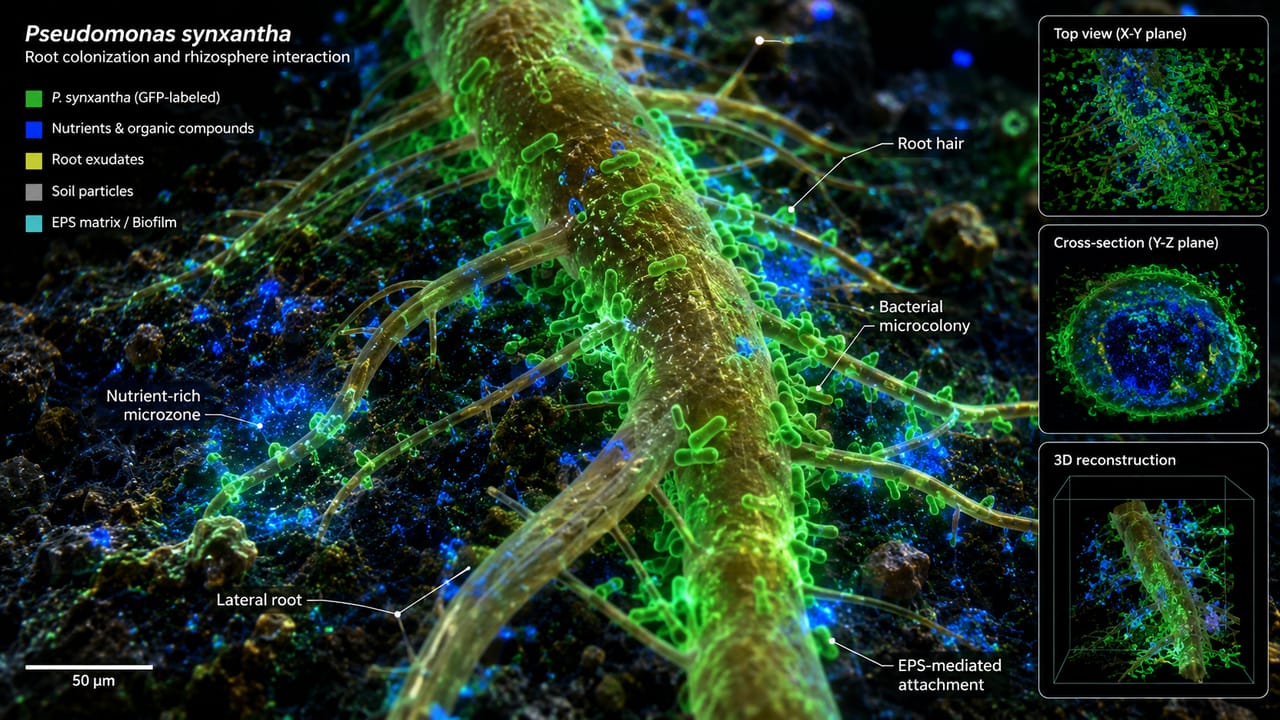
A groundbreaking study from the California Institute of Technology (Caltech) has shed light on how these microscopic organisms adapt to stress, specifically when an essential macronutrient like phosphorus is scarce. Published in the journal Current Biology, this research holds profound implications for sustainable agriculture, soil management, and crop resilience under the pressures of climate change.
Also Read: Alzheimer's Microglia Reprogramming Study: Take the Quiz
The Chemistry of Soil and the Role of Phosphorus
Phosphorus is one of the three primary macronutrients required by plants and microbes (along with nitrogen and potassium). It plays a crucial role in molecular biology, serving as a structural component of DNA, RNA, and ATP (adenosine triphosphate), which drives cellular energy transfer.
However, phosphorus is notoriously tricky in agricultural contexts. While it may be present in the soil, it is frequently bound chemically to other elements, such as iron, aluminum, or calcium, making it insoluble and highly unavailable to plants and microbes alike. This "bio-scarcity" makes phosphorus limitation an ecologically critical scenario to study. Soil bacteria have evolved sophisticated survival mechanisms to unlock this bound resource, often altering their behavior through intercellular communication systems.
What is Quorum Sensing?
To understand the Caltech study's discovery, one must understand quorum sensing. This is a molecular signaling system that allows bacterial communities to communicate and coordinate collective behaviors. Bacteria continuously secrete autoinducers (signaling molecules) into their microenvironment. When the bacterial population grows and reaches a high density, these signaling molecules accumulate to a critical threshold concentration.
Once this threshold is reached, it triggers a cascade of gene expressions across the community. This collective activation prompts behaviors that would be ineffective for a single bacterium but highly successful for a group, such as biofilm formation, virulence, or the production of secondary metabolites.
The Discovery: Adapting the Quorum Sensing Rules
Led by Dianne Newman, the Gordon M. Binder/Amgen Professor of Biology and Geobiology at Caltech, and first-authored by postdoctoral scholar Reinaldo Alcalde, the study investigated how the soil-associated bacterium Pseudomonas synxantha produces chemical survival compounds called phenazines under stress.
Phenazines act as a biological "Swiss Army knife." They can:
- Facilitate nutrient acquisition (such as mobilizing locked iron and phosphorus).
- Engage in competition with neighboring microbes.
- Protect cells from toxic environmental stressors.
Traditionally, scientists believed that phenazine production was strictly triggered by high cell densities. However, the Caltech team discovered that phosphorus stress fundamentally lowers the threshold required to trigger quorum sensing. In environments lacking bioavailable phosphorus, Pseudomonas synxantha becomes hyper-sensitive to signaling molecules, allowing sparse, isolated populations to produce phenazines and coordinate cooperative survival strategies much earlier than they normally would.
Also Read: UP Heatwave Alert: 5 Scientific Ways to Survive 47.6°C Extreme Heat
Comparing Bacterial Behavior Under Different Environments
The table below highlights the stark behavioral differences of Pseudomonas synxantha when shifting from nutrient-rich states to phosphorus-depleted stress states:
| Environmental Condition | Cell Density Required for Quorum Sensing | Autoinducer Sensitivity | Phenazine Production Trigger | Primary Adaptation Goal |
|---|---|---|---|---|
| Optimal Phosphorus | High Cell Density Only | Standard Sensitivity | Crowded environment detection | General population maintenance & resource division |
| Phosphorus Scarcity (Stress) | Low to Sparse Density | Highly Elevated Sensitivity | Low autoinducer thresholds | Metabolic survival, mineral solubilization, & defense |
Technological Breakthrough: Imaging Root-Microbe Interactions in 3D
Historically, studying the complex physical architecture of soil in a laboratory has been incredibly difficult. Traditional microscopy struggles to capture the opaque, highly structured environment of root systems.
To overcome this, Alcalde collaborated with biophotonics specialist Oumeng Zhang (then a postdoctoral scholar in Changhuei Yang’s lab) to design and construct a custom light-sheet fluorescence microscope from scratch. Funded by several Caltech interdisciplinary centers, this specialized microscope generates live, three-dimensional images of plant roots in real time. For the first time, researchers can visually track exactly how microbes colonize roots, interact within confined soil-pore spaces, and secrete metabolically active compounds like phenazines under natural, stressful conditions.
Broader Implications for Agriculture
This discovery has major implications for modern agriculture. As climate change continues to impact global soil health and deplete water resources, agricultural systems must rely less on synthetic, energy-intensive chemical fertilizers and more on natural soil microbiomes.
By optimizing plant-microbe interactions in the rhizosphere (the root-adjacent soil zone), we can enhance natural crop resilience and build a more sustainable food supply for the future.
Start Quizzes [MCQs]
REPORT CARD
ATTEMPTED QUESTIONS: 0CORRECT ANSWERS: 0
WRONG ANSWERS: 0
PRACTICE REGULARLY!
Frequently Asked Questions
How does phosphorus stress affect quorum sensing in soil bacteria?
Phosphorus stress lowers the activation threshold for quorum sensing. This allows bacteria to communicate and trigger collective survival mechanisms, like producing phenazines, even in sparse and non-crowded populations.
What are phenazines and why are they important?
Phenazines are microbial chemical compounds that act like a biological 'Swiss Army knife'. They help bacteria acquire locked nutrients (like iron and phosphorus), compete with neighboring microbial species, and survive harsh environmental stresses.
How did the Caltech researchers visualize these bacteria-root interactions?
The research team custom-built a light-sheet fluorescence microscope specifically tailored to generate live, three-dimensional images of root-microbe interactions in their naturally opaque environments.