
Landmark Kerala Study Validates Efficacy of Generic Drugs
For decades, a pervasive skepticism has shadowed the Indian pharmaceutical market: are cheaper generic medicines actually as effective as their expensive, branded counterparts? A groundbreaking citizen-funded study conducted in Kerala has provided definitive scientific evidence to put this debate to rest. The study reveals that generic medicines sold across the state are not only chemically identical and structurally equivalent to premium branded drugs, but they also cost up to 50% less.
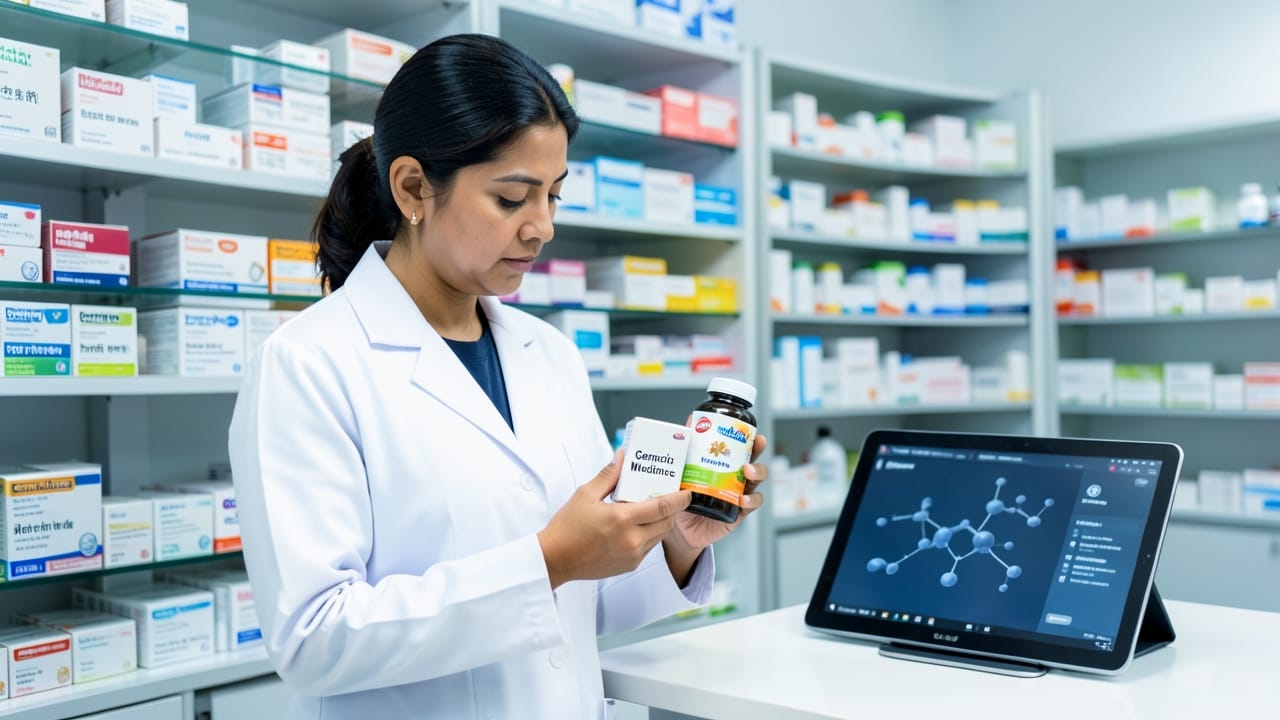
Published in the prestigious international journal Frontiers in Pharmacology, the research is particularly vital for Kerala, where out-of-pocket healthcare expenses represent a massive economic burden for families. According to health data, pharmaceutical purchases account for nearly two-thirds of all household healthcare spending in the state, driven heavily by chronic illnesses that require daily, lifelong therapeutic management.
The Financial Impact: Saving Thousands Annually
For patients dealing with chronic conditions such as hypertension, diabetes, and cardiovascular diseases, the cost of monthly medication can quickly become unsustainable. This financial strain often leads to dangerous coping mechanisms, including rationing dosages or skipping essential treatments altogether.
The study highlights how transitioning from high-cost branded medicines to verified generic drugs can drastically reduce this financial burden. Researchers estimate that patients with chronic diseases can save between Rs 10,000 to Rs 15,000 annually by making the switch, guaranteeing sustained therapeutic adherence without compromising personal savings.
Also Read: Low Birth Weight and Stroke Risk in Healthy Adults
Rigorous Scientific Methodology
The study was conducted by the Mission for Ethics and Science in Healthcare (MESH) between August 2025 and December 2025. Researchers analyzed a total of 131 samples covering 22 essential medicines (in both tablet and capsule forms). To ensure a comprehensive overview, samples were sourced from various licensed distribution channels across Kerala, including:
- Central Government Jan Aushadhi outlets
- Kerala Medical Services Corporation Ltd (KMSCL) distribution counters
- Private generic retail chains
- Leading corporate branded manufacturers
Every single sample underwent a series of rigorous laboratory tests to analyze active pharmaceutical ingredients (API) and quality metrics. The results were flawless: 100% of the tested samples passed all standardized parameters regardless of their retail price or brand prestige.
Also Read: 5 foods boost immunity naturally
Key Testing Parameters and Results
| Quality Test Parameter | Scientific Purpose | Pass Rate (Generics vs. Branded) |
|---|---|---|
| Drug Content (Assay) | Verifies if the active pharmaceutical ingredient (API) is present in the exact prescribed quantity. | 100% Pass (No statistical variance) |
| Dissolution Rate | Measures the rate at which the tablet/capsule dissolves to release the active drug into the body. | 100% Pass (Optimal bio-availability) |
| Chemical Purity | Screens for toxic impurities, degraded compounds, or unauthorized chemical additives. | 100% Pass (Safe for consumption) |
| Weight Uniformity | Ensures that each individual pill contains a consistent and standardized dosage. | 100% Pass (Highly uniform) |
The Experts' Take on Generic Safety
Dr. Cyriac Abby Philips, a prominent clinician and lead researcher of the MESH study, emphasized that this data should serve as a wake-up call for both medical practitioners and the public. "There is a persistent belief—shared by patients and doctors alike—that cheaper generic medicines are somehow inferior to expensive branded ones. But now there is firm evidence for doctors to prescribe generics with confidence and for patients, it is real money saved with no compromise on safety," stated Dr. Philips, widely recognized across digital spaces as 'LiverDoc'.
However, the researchers also injected an important note of caution into their findings. While the results are overwhelmingly positive, they do not serve as a universal guarantee for unregulated markets.
Where You Settle Your Prescription Matters
The researchers clarified that these findings are bounded by specific regional and supply-chain limitations. Kerala possesses a robust, highly regulated healthcare infrastructure, meaning the samples tested came strictly from legitimate, state-licensed retail points.
| Sourcing Channel | Affordability Rank | Safety & Compliance Status |
|---|---|---|
| Jan Aushadhi Outlets | Highly Affordable (Most Cost-Effective) | Fully Certified / Gov-Regulated |
| KMSCL Distribution Counters | Highly Affordable | State-Inspected / High Quality |
| Private Generic Chains | Moderately Affordable | Varies (Stick to licensed retailers) |
| Leading Branded Medicines | Expensive (Up to 50% more costly) | Fully Compliant |
The Dual-Manufacturing Irony in Indian Pharma
Despite the stellar performance of the local drugs in this study, underlying systemic issues persist within the broader Indian pharmaceutical landscape. Addressing these complexities, pharmacologist Dr. T G Ravikumar pointed out a glaring dichotomy in how medicines are manufactured in India.
"There are inherent quality issues with both branded and generic medicines sold in India. Otherwise, how does one explain the irony that despite being the world's largest provider of generic medicines, we have separate manufacturing units for drugs exported abroad and drugs sold in domestic markets. While one complies with US and European standards, the other lacks such strict adherence, which can ultimately impact quality overall," Dr. Ravikumar observed.
This structural dualism highlights the ongoing need for domestic regulatory reforms. While the Kerala study proves that generic drugs procured from verified state-licensed vendors are exceptionally safe, country-wide standardized regulatory monitoring remains critical to sustaining this quality standard across all Indian states.
Frequently Asked Questions
Are generic drugs as effective as branded medicines?
Yes. A rigorous peer-reviewed study published in Frontiers in Pharmacology confirmed that 100% of the generic medicine samples tested passed every major quality control metric, including chemical purity, active drug content, and dissolution rate, making them bio-equivalent to branded ones.
How much money can a patient save by switching to generic drugs?
Patients, especially those managing chronic diseases that require long-term, daily medication, can save up to 50% on their bills, translating to roughly Rs 10,000 to Rs 15,000 in savings annually.
Which outlets sell the most affordable generic medicines?
The Central Government’s Jan Aushadhi stores were identified in the study as the most affordable licensed retail outlets, followed closely by state distribution counters like the Kerala Medical Services Corporation Ltd (KMSCL).
Can we assume all generic drugs in India are safe?
No. The study warns that where you buy matters. While drugs sourced from licensed, regulated pharmacies and government channels in states with strong healthcare infrastructure like Kerala are highly safe, unregulated, informal, or online markets may still pose safety and quality risks.