
Artemis II Heat Shield Aces Re-entry: NASA Confirms Robust Performance
NASA has revealed promising initial findings regarding the performance of the heat shield aboard the Artemis II Orion spacecraft during its recent return to Earth.
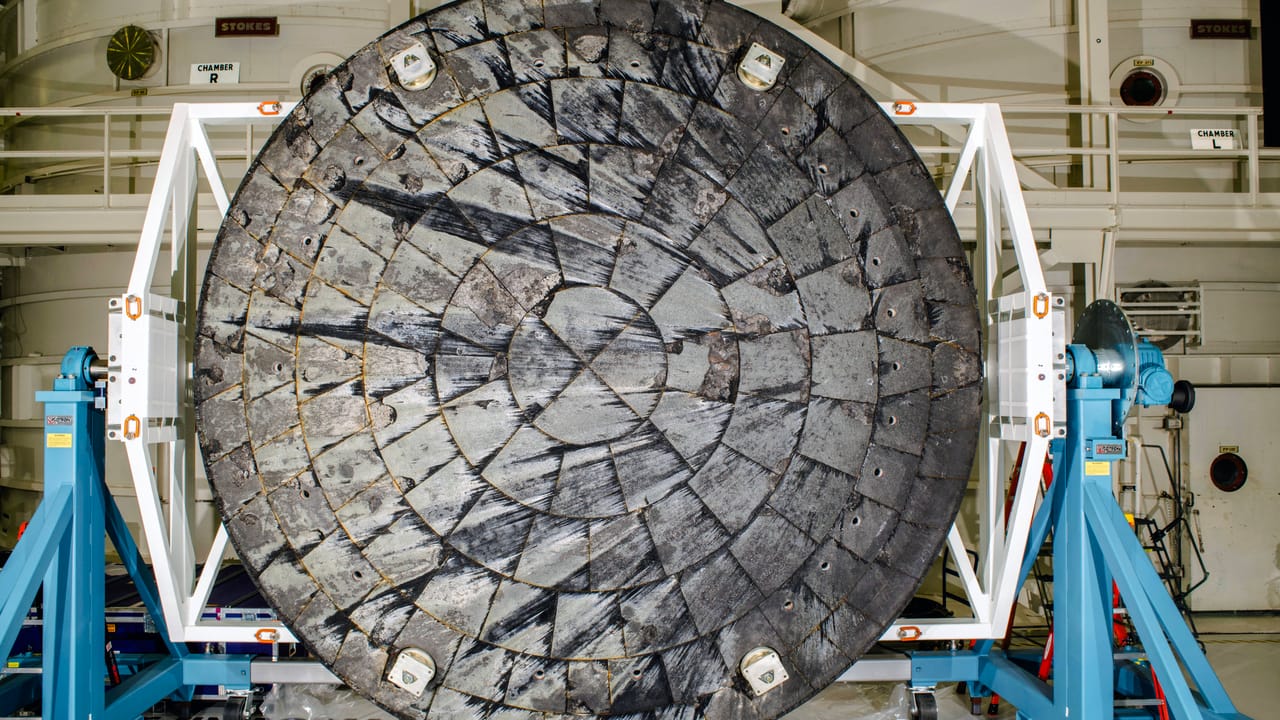
The agency is cautiously optimistic, reporting that the shield functioned as anticipated, marking a significant positive step for future crewed lunar missions.
A Shield Under Scrutiny: Lessons from Artemis I
The Artemis II mission, which launched on April 1, 2026, carried the critical objective of validating the Orion spacecraft's systems, including its vital heat shield, for a crewed lunar flyby. This was particularly crucial given the anomalies observed during the Artemis I mission in 2022. Upon the return of the Artemis I capsule, engineers discovered unexpected and concerning levels of cracking and charring on its heat shield. These findings prompted a thorough investigation and, consequently, a delay to the Artemis II mission to allow for the development and implementation of corrective measures.
Also Read: Bus-Sized Asteroid 2026 HJ1: NASA Confirms Safe Earth Flyby + Quiz
Addressing the Root Cause: Trapped Gases and Re-entry Trajectories
Following extensive post-Artemis I analysis, NASA pinpointed the issue to be related to the behavior of gases within the heat shield's ablative material. The unique re-entry technique employed during Artemis I, which involved a "skip" maneuver—dipping into the atmosphere to decelerate before skipping back out—was identified as a contributing factor. While this method offers advantages in terms of precision and reduced peak heating, it inadvertently trapped gases that led to degradation of the shield's material.
Instead of undertaking a complete redesign of the heat shield, NASA opted for a strategic adjustment to the re-entry profile. The agency decided to eliminate the skip maneuver entirely, opting for a more direct, single-pass re-entry. This revised trajectory was designed to mitigate the conditions that led to the observed charring and cracking.
Criticism and Validation: A Former Astronaut's Concerns
The decision to proceed with Artemis II using the existing heat shield, albeit with a modified re-entry trajectory, did not go unchallenged. Notably, former astronaut Charles Camarda, who was part of the Space Shuttle Return To Flight (STS-114) mission, expressed significant reservations, labeling the plan as "a very bad decision." These concerns highlighted the high stakes involved in crewed spaceflight and the paramount importance of heat shield integrity.
Also Read: SpaceX Falcon 9 and Cygnus XL: ISS Resupply Mission, MCQs
Artemis II: A Resounding Success for the Heat Shield
The splashdown of Artemis II on April 10, 2026, provided the crucial data NASA needed. Initial inspections conducted by recovery teams, including divers who photographed the spacecraft immediately after splashdown, revealed a stark contrast to the Artemis I findings. NASA reported that the "char loss behavior observed on Artemis I was significantly reduced, both in terms of quantity and size." Further examinations aboard the recovery ship corroborated these observations, indicating that the heat shield performed consistently with the arc jet facility ground tests conducted after the Artemis I mission.
Next Steps: Detailed Examination at Marshall Space Flight Center
While the initial results are highly encouraging, NASA is committed to a comprehensive understanding of the heat shield's performance. The heat shield will be transported to the Marshall Space Flight Center in Huntsville, Alabama, for in-depth scans and analysis. This detailed examination will allow engineers to verify the material's behavior during the extreme conditions of re-entry and further refine models for future missions.
Broader Mission Success and Future Implications
Beyond the heat shield, the Artemis II mission saw other critical systems perform admirably. The Orion capsule's landing accuracy was impressive, splashing down just 2.9 miles (approximately 4.7 km) from its intended target, a precision comparable to the Apollo missions. The launch systems, benefiting from lessons learned during Artemis I, also showed reduced damage to ground infrastructure, bolstering confidence for the Artemis III mission scheduled for 2027.
The successful validation of the heat shield's performance is a critical milestone, paving the way for subsequent Artemis missions, including the ambitious Artemis III, which aims for a lunar landing. The positive outcome underscores NASA's iterative approach to space exploration, learning from past challenges to ensure the safety and success of future endeavors.
Artemis II Heat Shield Performance MCQs Quiz
REPORT CARD
ATTEMPTED QUESTIONS: 0CORRECT ANSWERS: 0
WRONG ANSWERS: 0
PRACTICE REGULARLY!
Frequently Asked Questions
What were the issues with the Artemis I heat shield?
The Artemis I heat shield exhibited unexpected cracks and charring upon its return to Earth, raising concerns about its performance under re-entry conditions.
What caused the heat shield issues on Artemis I?
Investigations suggested that gases trapped within the heat shield's ablative material, exacerbated by the 'skip' re-entry maneuver used during Artemis I, led to the degradation.
How did NASA address the heat shield concerns for Artemis II?
Instead of redesigning the shield itself, NASA modified the re-entry trajectory for Artemis II, eliminating the 'skip' maneuver to reduce the conditions causing the observed charring.
Did the modified re-entry trajectory for Artemis II work?
Initial findings from Artemis II indicate that the modified trajectory was successful, with significantly reduced char loss compared to Artemis I, performing as expected.
What are the next steps for analyzing the Artemis II heat shield?
NASA plans to transport the heat shield to the Marshall Space Flight Center for more detailed scans and in-depth analysis to fully understand its performance.