
NASA's Curiosity Rover Uncovers 'Giant Dragon Scales' on Mars, Hinting at Ancient Water
NASA's intrepid Curiosity rover has once again captured the imagination of scientists and space enthusiasts with a remarkable discovery on the Martian surface. While traversing the Gale Crater, the rover encountered a surprising abundance of peculiar rock formations that bear a striking resemblance to the scales of a colossal reptile, leading to the moniker "giant dragon scales."
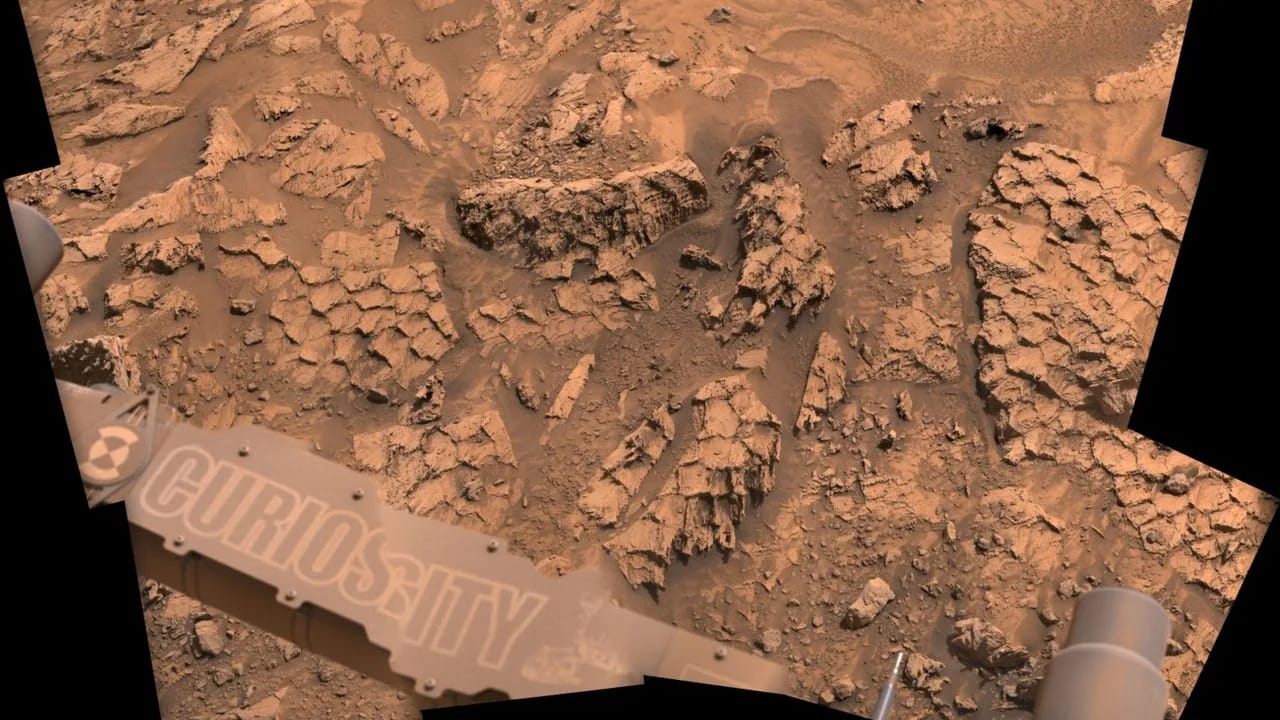
These formations, characterized by intricate honeycomb-like textures and polygonal patterns, are providing valuable clues about the planet's watery past and the potential for microbial life on Mars.
A Geological Puzzle in Gale Crater
The unusual rock formations were observed by Curiosity as it made its way towards Antofagasta, a relatively young impact crater measuring approximately 33 feet (10 meters) in diameter, situated on the slopes of Mount Sharp within the larger Gale Crater. The sheer quantity and distinctive tessellation of these "dragon scale" rocks have intrigued planetary scientists, even though similar polygonal patterns have been documented on Mars before.
Also Read: Artemis II Heat Shield Triumph: NASA Confirms Performance + Quiz
What are 'Dragon Scales'?
The "dragon scales" are essentially polygon-covered rocks. These polygons create a honeycomb-like texture across the surface of the rocks. While not biological in origin, their appearance has drawn comparisons to the scaly hide of reptiles like crocodilians, and more fancifully, to the mythical scales of dragons.
Context and Previous Discoveries
While the specific abundance of these formations near Antofagasta is noteworthy, polygonal rock patterns are not entirely new to Mars exploration. Previous observations by Curiosity and other Mars missions have often linked these shapes to geological processes involving the drying of mud or the sublimation (transition from solid to gas) of ice crystals just beneath the Martian surface. These processes can cause the ground to contract and crack, forming the distinctive polygonal shapes seen today.
Also Read: Bus-Sized Asteroid 2026 HJ1: NASA Confirms Safe Earth Flyby + Quiz
The Curiosity rover, which landed on Mars in 2012, has a long history of identifying intriguing geological features and objects that sometimes evoke comparisons to terrestrial life. These include:
| Feature Name | Description | Location | Potential Significance |
|---|---|---|---|
| 'Dragon Scales' | Polygon-covered rocks with honeycomb texture. | Near Antofagasta, Gale Crater. | Possible link to ancient water and geological processes (drying, ice). |
| 'Boxwork' Ridges | Zigzagging rock formations resembling spiderwebs. | Mount Sharp, Gale Crater. | Formed by erosion of harder mineral veins. |
| Egg-like Spheroids | Small, round formations attached to 'boxwork' ridges. | Mount Sharp, Gale Crater. | May be concretions formed by mineral-rich water. |
| Coral-like Rock | A formation resembling terrestrial coral. | Various locations, Gale Crater. | Likely a unique geological structure formed by mineral deposition. |
| 'Turtle' Rock | A rock formation that resembles a turtle. | Jezero Crater (Perseverance rover). | An example of pareidolia; geological erosion. |
Investigating the 'Dragon Scales'
Scientists at NASA's Jet Propulsion Laboratory (JPL) are now meticulously analyzing the extensive image and chemical data collected by Curiosity from these "scale-like" rocks. The goal is to differentiate between the various hypotheses concerning their formation. While the general mechanism for polygonal cracking is understood, the specific environmental conditions that led to such a high concentration of these features near Antofagasta remain an area of active research. The findings could further illuminate the history of water on Mars and the geological processes that shaped its ancient landscapes.
Pareidolia: The Science Behind Familiar Shapes
It is important to note that many of these intriguing shapes, including the "dragon scales," "spiders," and "turtles," are often subject to pareidolia. This is a psychological phenomenon where the human brain perceives familiar patterns, such as faces or familiar objects, in random or ambiguous visual stimuli. While the shapes can be fascinating and spark our imagination, the scientific investigation focuses on the underlying geological and chemical processes.
The Ongoing Quest for Martian History
The Curiosity rover's ongoing mission continues to provide invaluable data, pushing the boundaries of our understanding of Mars. The "dragon scale" discovery is another piece in the complex puzzle of the Red Planet's history, reinforcing the idea that water played a significant role in its geological evolution. Future analyses will undoubtedly shed more light on these captivating Martian formations as missions like the SpaceX Falcon 9 and Cygnus XL continue to support space exploration infrastructure.
Quiz: NASA's Curiosity Rover's 'Dragon Scales' on Mars
REPORT CARD
ATTEMPTED QUESTIONS: 0CORRECT ANSWERS: 0
WRONG ANSWERS: 0
PRACTICE REGULARLY!
Frequently Asked Questions
What are the 'dragon scales' found on Mars?
The 'dragon scales' are polygon-covered rocks on Mars that have a honeycomb-like texture, resembling the scales of a giant reptile. They are not biological but are formed by geological processes.
Which NASA rover discovered these formations?
NASA's Curiosity rover discovered the 'dragon scale' formations in the Gale Crater.
What might these formations tell us about Mars?
These formations, particularly their polygonal patterns, are often linked to ancient water and geological processes such as the drying of mud or the sublimation of subsurface ice, providing clues about Mars's watery past.
Are these formations unique to this discovery?
While similar polygonal rock patterns have been observed on Mars before, the abundance and distinctiveness of these formations near Antofagasta in the Gale Crater surprised scientists.
What is pareidolia and how does it relate to these Martian features?
Pareidolia is the psychological tendency to see familiar patterns in random stimuli. It explains why many people might see 'dragon scales,' 'turtles,' or other familiar shapes in Martian geology, even though the formations have natural geological explanations.