
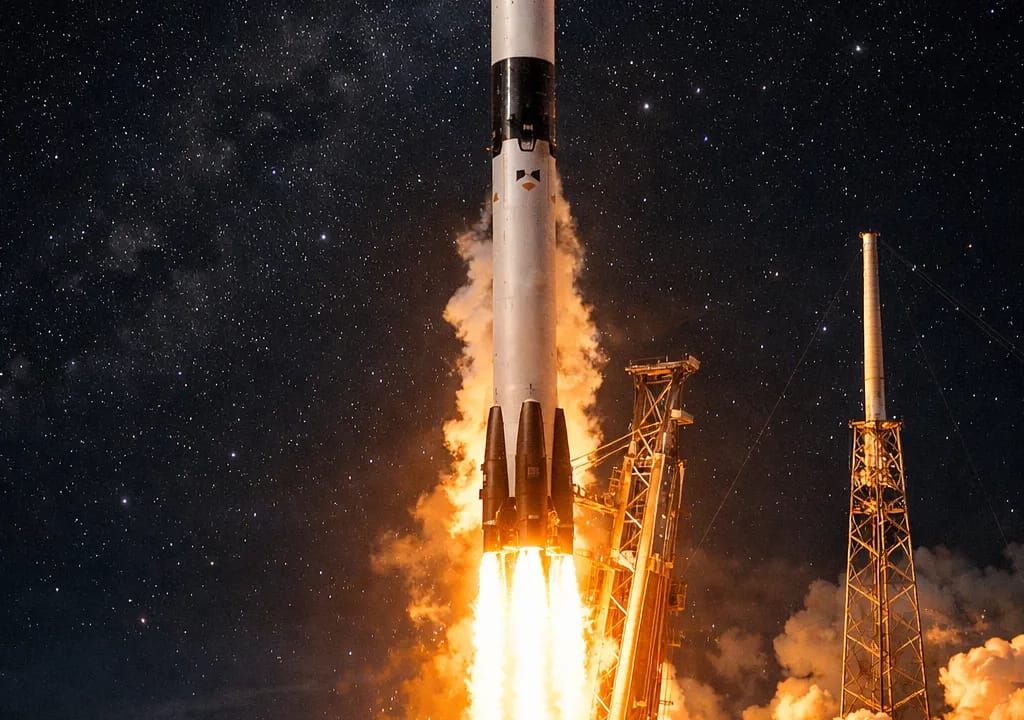
SpaceX Falcon 9 Successfully Launches Northrop Grumman's Cygnus Cargo Ship to ISS
In a routine yet critical mission, SpaceX's workhorse Falcon 9 rocket soared into the night sky, carrying the Northrop Grumman Cygnus spacecraft on a vital resupply mission to the International Space Station (ISS). The launch, originating from the Cape Canaveral Space Force Station in Florida, marked another successful operation for both SpaceX and NASA's Commercial Resupply Services program.
Understanding the Mission: Cygnus XL and the ISS
The Cygnus spacecraft, named 'SS Katherine Johnson' in honor of the pioneering NASA mathematician, is designed to deliver essential cargo, scientific experiments, and supplies to the orbiting laboratory. Unlike SpaceX's Dragon capsule, Cygnus is an expendable vehicle, meaning it is typically destroyed upon re-entry into Earth's atmosphere after completing its mission.
The International Space Station, a marvel of engineering and international cooperation, requires a constant stream of resources to sustain its six-person crew and ongoing scientific research. These resupply missions are therefore indispensable for the station's continued operation and the advancement of space exploration.
The Falcon 9: A Reliable Launch Vehicle
The Falcon 9, developed by Elon Musk's SpaceX, has become the backbone of commercial spaceflight. Known for its reliability and reusability, the Falcon 9's first stage boosters are designed to return to Earth and land vertically, allowing for refurbishment and reuse on future missions. This reusability significantly reduces the cost of space access.
For this mission, the Falcon 9 utilized its Block 5 variant, the latest iteration designed for maximum reliability and payload capacity. The successful ascent and fairing separation are critical milestones in ensuring the Cygnus spacecraft reaches its intended orbit safely.
Key Details of the Launch
| Parameter | Details |
|---|---|
| Launch Vehicle | SpaceX Falcon 9 (Block 5) |
| Spacecraft | Northrop Grumman Cygnus NG-20 "SS Katherine Johnson" |
| Payload | Approximately 3,700 kg (8,200 lbs) of cargo, including scientific experiments, crew supplies, and hardware. |
| Launch Site | Cape Canaveral Space Force Station, Florida |
| Destination | International Space Station (ISS) |
| Operator | Northrop Grumman (under NASA CRS-2 contract) |
The Cygnus Spacecraft: Features and Capabilities
The Cygnus spacecraft is specifically designed for cargo transport. Its Pressurized Cargo Module (PCM) can carry a wide variety of supplies, including food, water, clothing, and equipment. It also contains unpressurized cargo, such as spare parts and hardware. The spacecraft is equipped with its own propulsion system for maneuvering in orbit and for its eventual de-orbit burn.
The 'SS Katherine Johnson' is the 20th Cygnus mission under NASA's Commercial Resupply Services (CRS) program, highlighting the long-standing partnership and the effectiveness of utilizing commercial providers for vital ISS logistics.
The Importance of Resupply Missions
These missions are not just about delivering food and water. They are crucial for:
- Scientific Research: Delivering new experiments and equipment for astronauts to conduct groundbreaking research in microgravity across various fields like biology, physics, and materials science.
- Station Maintenance: Providing spare parts and tools necessary for the upkeep and repair of the ISS complex.
- Crew Well-being: Ensuring the astronauts have adequate supplies for daily living, personal hygiene, and health.
- Future Exploration: Supporting the development and testing of technologies needed for future human missions to the Moon and Mars.
Looking Ahead
The successful launch of Cygnus is a testament to the robust capabilities of SpaceX's Falcon 9 and the vital role of commercial partners in maintaining humanity's presence in low Earth orbit. As the ISS continues its operations, these resupply missions remain a cornerstone of its success, paving the way for future endeavors in space.
SpaceX Falcon 9 Launches Cygnus XL for NASA ISS Resupply Mission MCQ & Quiz
REPORT CARD
ATTEMPTED QUESTIONS: 0CORRECT ANSWERS: 0
WRONG ANSWERS: 0
PRACTICE REGULARLY!
Frequently Asked Questions
What rocket launched the Cygnus spacecraft for the NASA ISS resupply mission?
The SpaceX Falcon 9 rocket was used to launch the Cygnus spacecraft for this NASA ISS resupply mission.
What was the name of the Cygnus spacecraft on this mission?
The Cygnus spacecraft was named "SS Katherine Johnson" in honor of the pioneering NASA mathematician.
What is the primary role of the Cygnus spacecraft?
The primary role of the Cygnus spacecraft is to deliver essential cargo, scientific experiments, and supplies to the International Space Station (ISS).
Where did the Falcon 9 launch take place?
The launch took place from the Cape Canaveral Space Force Station in Florida.
Is the Cygnus spacecraft reusable?
No, the Cygnus spacecraft is typically an expendable vehicle, meaning it is destroyed upon re-entry into Earth's atmosphere after completing its mission. This is different from the reusable first stage of the Falcon 9 rocket.
What is a significant feature of the SpaceX Falcon 9 rocket?
A significant feature of the SpaceX Falcon 9 rocket is the reusability of its first stage boosters, which land vertically after launch, helping to reduce the cost of space access.
What is the approximate amount of cargo delivered by the Cygnus spacecraft?
The Cygnus spacecraft delivered approximately 3,700 kg (8,200 lbs) of cargo, including scientific experiments and crew supplies.
Which program does NASA use to contract for commercial resupply missions to the ISS?
NASA utilizes its Commercial Resupply Services (CRS) program to contract with commercial companies for ISS resupply missions.