
Artemis II Heat Shield Emerges from the Ocean: A Haunting Glimpse and What It Means
NASA has released a striking underwater photograph revealing the heat shield of the Orion spacecraft post-splashdown. The image, captured after the successful return of the Artemis II astronauts from their lunar flyby, offers a critical look at a component that has been a focal point of public and expert scrutiny.
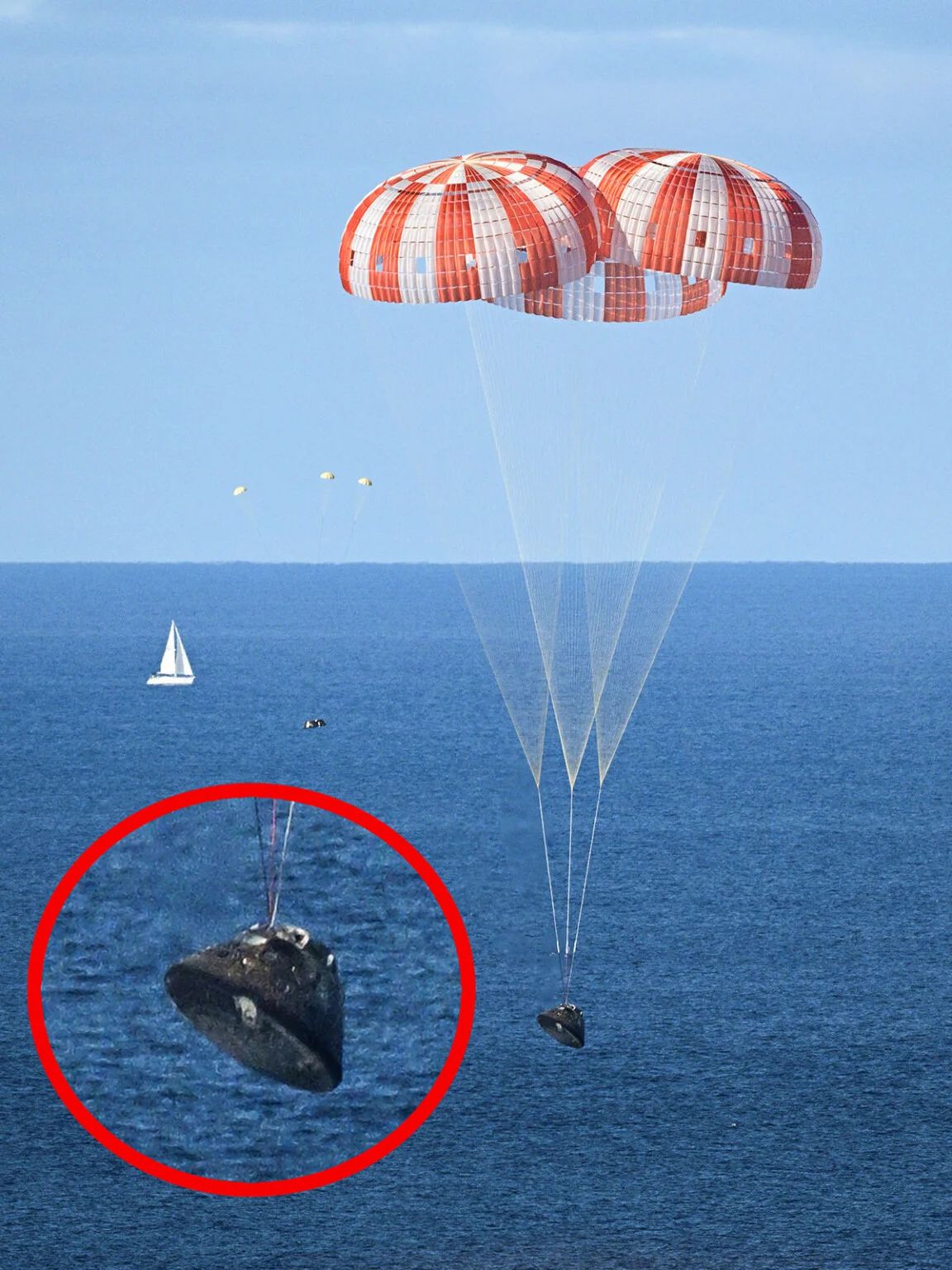
This visual documentation provides valuable insights into the spacecraft's re-entry performance and the ongoing advancements in NASA's deep space exploration program.
A Deep Dive into the Artemis II Heat Shield's Condition
The photograph, taken on April 10, 2026, shows the heat shield submerged in the Pacific Ocean shortly after the Orion capsule completed its mission. This mission saw four astronauts journey around the Moon and return safely to Earth, a critical step towards future lunar landings. The heat shield's condition is paramount, as it is designed to withstand the extreme temperatures generated by atmospheric re-entry, which can reach thousands of degrees Fahrenheit.
The Shadow of Artemis I: Past Concerns and Present Reassurances
Concerns surrounding the heat shield's integrity were amplified following the Artemis I mission. The uncrewed flight, a vital test for the Space Launch System (SLS) rocket and Orion spacecraft, revealed significant charring and erosion on its heat shield. This observation led to questions about whether the technology was sufficiently robust for crewed missions. Experts, including retired NASA astronaut Charles Camarda, publicly voiced their reservations, highlighting the need for thorough investigation and potential modifications.
NASA has acknowledged these concerns and has been diligently analyzing the performance data. The agency revealed that inspections following the Artemis II splashdown, both from diver imagery and subsequent examination on the recovery ship, indicated a marked improvement. "Diver imagery of the spacecraft’s heat shield initially taken after splashdown and further inspections on the recovery ship found the char loss behavior observed on Artemis I was significantly reduced, both in terms of quantity and size," NASA stated. This suggests that the engineering and material science teams have made substantial progress in addressing the issues encountered during Artemis I.
Also Read: Artemis II Heat Shield Triumph: NASA Confirms Performance + Quiz
Technical Adjustments and Visual Clarity
To further mitigate risks, NASA strategically adjusted the trajectory of the Artemis II reentry. This maneuver was designed to minimize the peak heating experienced by the spacecraft during its descent through Earth's atmosphere. The goal was to ensure the heat shield performed optimally under less extreme conditions, allowing for a comprehensive evaluation of its capabilities.
Additionally, initial public interpretation of an image showing the Orion spacecraft parachuting into the ocean raised eyebrows. A distinct white mark visible on the underside of the capsule led some to speculate about material loss. However, NASA Administrator Jared Isaacman quickly clarified that this was an anticipated phenomenon. "The discoloration was not liberated material," Isaacman explained on April 12. "The white color observed corresponds to the compression pad area and is consistent with the local geometry, AVOCAT byproducts, and transitional heating environments. We observed this behavior in arc jet testing and expected it in this compression pad area." This explanation underscored the difference between expected ablation and structural damage.
The Science Behind the Heat Shield
The heat shield is a critical safety feature of any spacecraft designed for atmospheric re-entry. It is typically made of ablative materials that are designed to burn away and dissipate the intense heat generated by friction with the atmosphere. This process protects the spacecraft and its occupants from temperatures that can exceed those found on the surface of the Sun.
Also Read: SpaceX Falcon 9 and Cygnus XL: ISS Resupply Mission, MCQs
Looking Ahead: Continued Scrutiny and Future Missions
While the initial assessments of the Artemis II heat shield's performance are positive, NASA remains committed to a thorough and detailed inspection. The agency will continue to examine the heat shield more closely in the coming months to gather comprehensive data. This meticulous approach is vital as NASA prepares for more ambitious Artemis missions, including eventual human landings on the Moon and eventual missions to Mars.
The Artemis program represents a monumental leap in human space exploration, and each mission, including the successful Artemis II, provides invaluable data and experience. The image of the Artemis II heat shield, while perhaps 'haunting' to some, is ultimately a testament to the resilience of NASA's engineering and the dedication of the teams working to push the boundaries of space travel.
Artemis II Heat Shield Knowledge Check: Take the Quiz!
REPORT CARD
ATTEMPTED QUESTIONS: 0CORRECT ANSWERS: 0
WRONG ANSWERS: 0
PRACTICE REGULARLY!
Frequently Asked Questions
What was the primary reason for public concern regarding the Artemis II heat shield?
Concerns were heightened due to the significant charring observed on the heat shield after the uncrewed Artemis I mission, raising questions about its durability for crewed flights.
Which agency released the underwater photo of the Artemis II heat shield?
NASA is the space agency responsible for the Artemis program and released the official underwater photograph of the Orion spacecraft's heat shield.
What did NASA state about the char loss behavior of the Artemis II heat shield compared to Artemis I?
NASA reported that the char loss observed on the Artemis II heat shield was significantly reduced in both quantity and size compared to the findings from Artemis I.
What adjustment did NASA make to the Artemis II reentry trajectory?
The trajectory of Artemis II's reentry was specifically adjusted to minimize the amount of heat build-up the spacecraft experienced.
What did NASA Administrator Jared Isaacman say about the white mark observed on the Orion spacecraft during descent?
Isaacman clarified that the white discoloration was an expected result of local geometry, byproducts, and transitional heating in the compression pad area, observed during arc jet testing.
What is the primary purpose of a spacecraft's heat shield?
Heat shields are critical for protecting spacecraft and their occupants from the immense heat (thousands of degrees Fahrenheit) caused by friction with the Earth's atmosphere during re-entry.
The Artemis II mission included a crewed journey to which celestial body?
The Artemis II mission was a crewed lunar flyby, marking a significant step in NASA's return to the Moon program.
Which former NASA astronaut expressed reservations about the heat shield's capability after Artemis I?
Retired NASA astronaut Charles Camarda was among the experts who voiced concerns about the heat shield's performance after the findings from the Artemis I mission.
What does 'ablation' refer to in the context of a heat shield?
Ablation is the intentional burning away and vaporization of the heat shield's material, which carries heat away from the spacecraft, protecting it and its occupants.
What is the long-term goal of NASA's Artemis program?
The Artemis program aims to land humans on the Moon, establish a sustainable lunar presence, and use the experience gained to prepare for future human missions to Mars.