
The Changing Face of Cancer: Why the 30s Are No Longer Safe
For decades, cancer was perceived as a late-life disease—an illness that loomed over retirement years, heavily linked to the natural processes of aging and cellular decline. However, that perception is being systematically shattered.
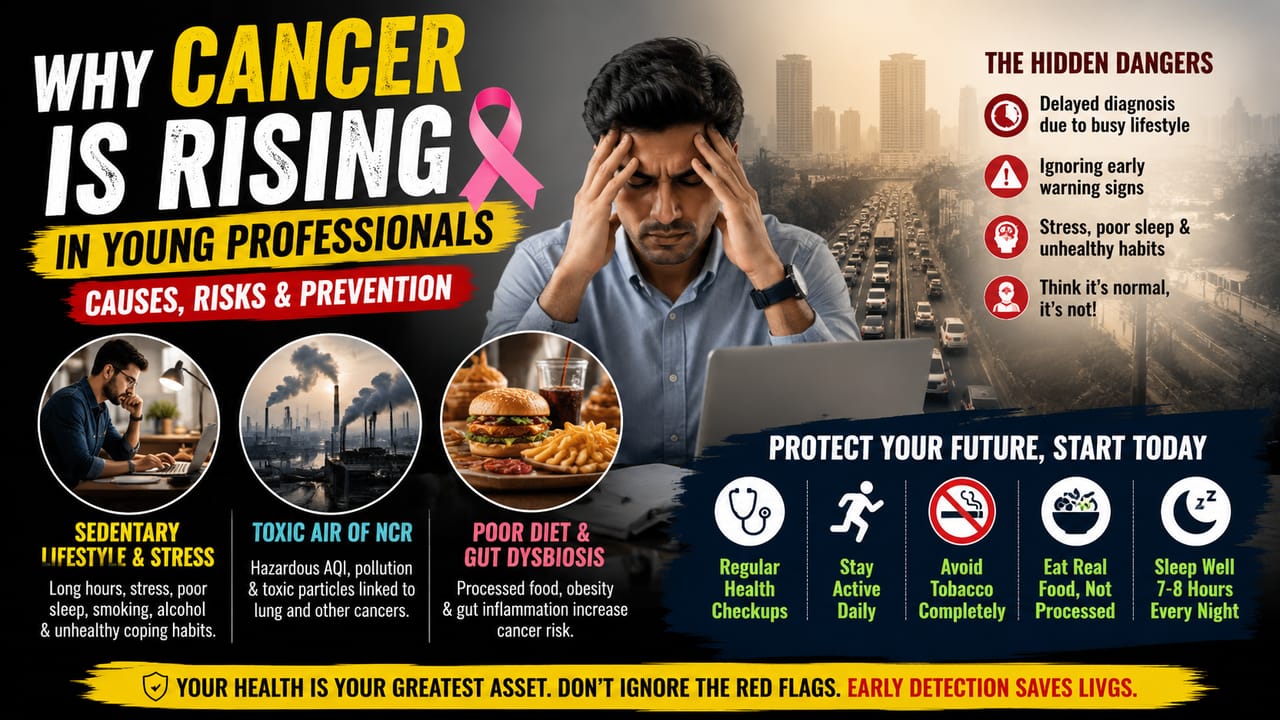
In the National Capital Region (NCR), including Delhi, Noida, Gurgaon, and Ghaziabad, oncology departments are witnessing a dramatic demographic shift. Young professionals in their 30s—active, ambitious, and in the prime of their careers—are increasingly walking out of hospitals with a diagnosis that once felt a generation away.
These individuals are at crucial junctures in their lives: establishing careers, raising young families, purchasing their first homes, and planning their futures. Instead of navigating promotions, they are suddenly thrown into a world of biopsies, chemotherapy cycles, surgical consultations, and long-term surveillance. According to medical experts, this trend is far from a collection of isolated, anecdotal events; it is a systemic crisis driven by modern lifestyles, industrial environmental exposures, and delayed medical attention.
Understanding the Numbers: A Shift in India's Cancer Demographics
Data compiled by the National Cancer Registry Programme (NCRP), managed under the auspices of the Indian Council of Medical Research (ICMR), highlights a steady and worrying rise in early-onset cancers. While cancer remains statistically more prevalent in older populations, the rate of increase among adults under the age of 50 is accelerating globally, with urban regions like the NCR acting as primary hotspots.
To understand what types of cancers are rising fastest and what is driving them among young urbanites, consider the following breakdown:
| Cancer Type | Prevalence Shift in Young Adults | Primary Urban / Lifestyle Drivers |
|---|---|---|
| Colorectal Cancer | Rising rapidly in young men and women in their 30s. | Diets high in ultra-processed foods, physical inactivity, obesity, and low fiber consumption. |
| Breast Cancer | Now the most common cancer among young urban Indian women. | Delayed childbearing, lower rates of breastfeeding, high stress, obesity, and genetic mutations (BRCA1/BRCA2). |
| Lung Cancer | Increasingly diagnosed in young non-smokers, especially in Delhi-NCR. | Extreme seasonal and chronic air pollution (fine particulate matter PM2.5), environmental pollutants, and passive smoking. |
| Thyroid Cancer | Rising incidence among young female professionals. | Over-diagnosis due to high-resolution screenings combined with environmental and endocrine disruptors. |
Also Read: know obesity health danger risks
The Perfect Storm: Modern Urban Lifestyles and Environmental Toll
Medical professionals caution that the spike in young-onset cancers cannot be attributed to a single gene or a single bad habit. Instead, it is the result of a "perfect storm" generated by modern urban existence.
Dr. Sajjan Rajpurohit, Director and Head of Medical Oncology at Cancer Care, Medanta Noida, explains that the classic perception of cancer as an elderly disease is fading fast: "In NCR, several types of cancer are becoming more common among people aged 30 to 40 years, especially urban professionals. In addition to improvements in diagnosis and increasing awareness, there are also some lifestyle and environmental factors involved in this trend."
1. The Sedentary Corporate Life and Stress
The standard day for an NCR professional typically consists of extended periods of sitting, skipping meals, high caffeine intake to survive deadlines, and continuous exposure to blue-light screens. Chronic mental stress triggers persistent inflammatory states in the body. While stress does not directly mutate DNA, it drives high-risk secondary behaviors, such as binge drinking, social smoking, stress eating, and severe sleep deprivation.
2. The Toxic Air of NCR
Environmental factors in Delhi and its surrounding satellite cities cannot be ignored. The air quality index (AQI) routinely hits hazardous levels, exposing residents to carcinogenic heavy metals and particulate matter. Long-term inhalation of polluted air has been clinically linked to non-small cell lung cancers, even in individuals who have never touched a cigarette in their lives.
3. Diet, Obesity, and Gut Dysbiosis
The transition toward highly refined carbohydrates, trans fats, and artificial preservatives has fundamentally altered the gut microbiome of young adults. Chronic gut inflammation and metabolic syndromes—most notably obesity—are directly associated with an increased risk of at least 13 types of cancer, including pancreatic, kidney, and esophageal cancers.
The Great Danger: Why Young Professionals Ignore the Red Flags
Perhaps the most challenging obstacle to treating cancer in younger adults is delayed diagnosis. When an older adult experiences chronic fatigue or sudden weight loss, they are quick to seek medical attention. When a 32-year-old corporate worker experiences the same symptoms, they routinely rationalize them away:
- Fatigue is blamed on long work hours or poor sleep.
- Unexplained weight loss is celebrated as a passive victory or attributed to stress.
- Changes in bowel habits or chronic acidity are chalked up to "spicy street food" or erratic meal times.
- Painless lumps are ignored because they don't hurt and taking half a day off to visit a clinic is pushed down the priority list.
According to the National Cancer Control Programme, catching a malignancy at Stage 1 or 2 dramatically increases the probability of a complete cure. Delaying diagnosis to Stage 3 or 4 because of corporate deadlines or general denial is a tragic, yet common, reality in urban clinics.
Also Read: daily exercise health benefits
Mitigating the Risk: Actionable Prevention in Your 30s
While genetics play a definitive role in cancer development, epigenetic research shows that our environment and lifestyle choices can trigger or suppress these genetic vulnerabilities. Young professionals must treat their health as a non-negotiable metric, similar to their professional KPIs.
To reduce risk, oncologists suggest adopting these foundational principles:
- Schedule Regular Checkups: If you have a known family history of cancers (especially breast, ovarian, or colorectal), request genetic screening and begin diagnostic imaging much earlier than standard protocols suggest.
- Commit to Physical Activity: Dedicate at least 150 minutes of moderate-intensity aerobic exercise, or 75 minutes of vigorous exercise, every single week.
- Eliminate Tobacco: Smoking, vaping, and chewing tobacco are absolute carcinogens with zero safe exposure thresholds.
- Audit Your Diet: Maximize whole-food intake, incorporating leafy greens, fiber, and antioxidant-rich foods while eliminating ultra-processed, sodium-laden, and sugar-heavy packaged foods.
- Protect Your Sleep: Aim for 7 to 8 hours of restorative sleep to allow your immune system to detect and repair cellular mutations naturally.
Test Your Knowledge: Early-Onset Cancer Awareness Quiz
How well do you understand the risks, trends, and preventive steps for cancer in your 30s? Take our 10-question multiple-choice quiz below to find out!
REPORT CARD
ATTEMPTED QUESTIONS: 0CORRECT ANSWERS: 0
WRONG ANSWERS: 0
PRACTICE REGULARLY!
Frequently Asked Questions
Why is early-onset cancer rising among young professionals in Delhi-NCR?
A combination of factors drives this rise: high stress, chronic sleep deprivation, sedentary habits, metabolic issues like obesity, extreme air pollution, and delayed health checkups.
What cancers are most commonly seen in adults under 50?
Globally and locally in the NCR, doctors are reporting a spike in colorectal, breast, thyroid, lung, and certain types of blood cancers among young adults.
What warning signs should young adults not ignore?
Do not ignore persistent fatigue, unexplained weight loss, constant changes in bowel habits, irregular or unusual bleeding, frequent infections, or any painless lumps.