
The Double-Edged Sword of the Monsoon: Relief vs. Seasonal Sickness
With the arrival of the monsoon rains, parched urban landscapes finally find respite from oppressive summer temperatures. However, this sudden meteorological shift frequently comes at a biological cost. In cities like Ahmedabad, which regularly endure blistering summers exceeding 40°C, the sudden transition to cooler, damp environments triggers a dramatic uptick in seasonal health complaints.
Also Read: UP Heatwave Alert: 5 Scientific Ways to Survive 47.6°C Extreme Heat
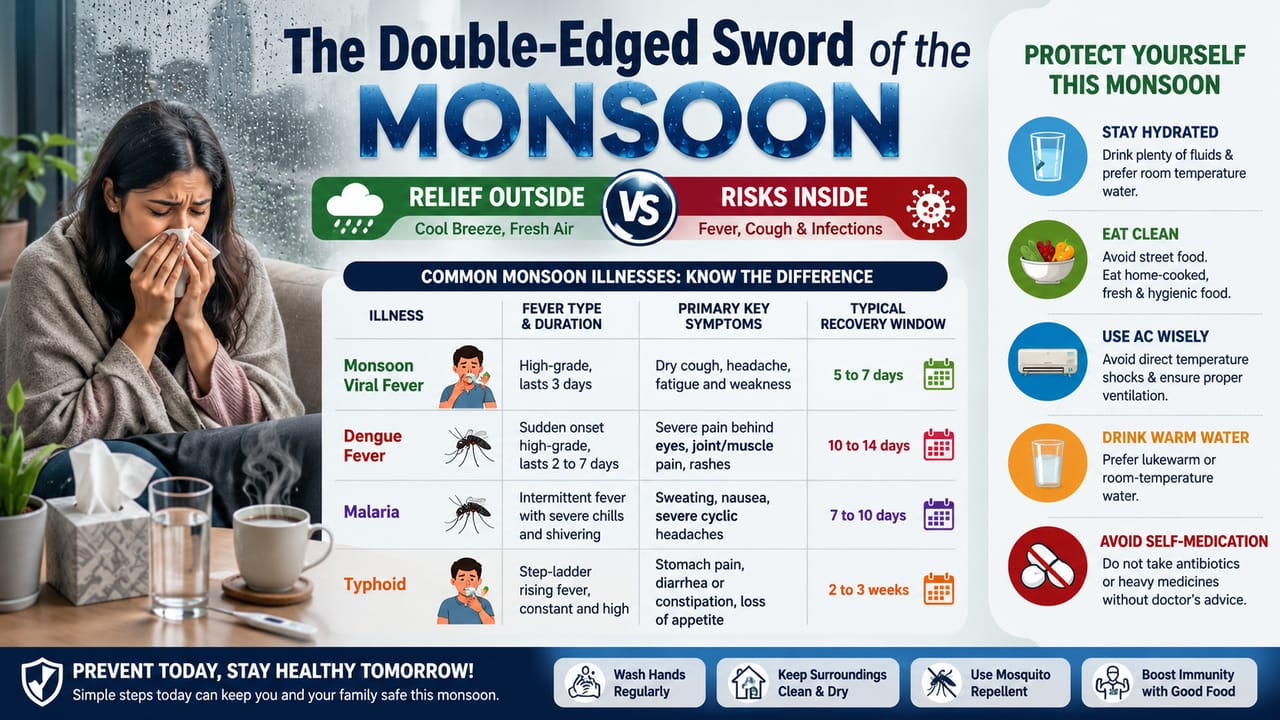
Local medical clinics and outpatient departments (OPDs) are currently witnessing a massive influx of patients presenting with high-grade fever, persistent dry coughs, and debilitating post-viral fatigue.
Understanding this transition, learning how to distinguish between common viral infections and severe vector-borne diseases, and knowing how to protect your household are critical steps to staying healthy this rainy season.
The Science Behind the Seasonal Transition: Why Do We Fall Sick?
The human body is an incredibly adaptive machine, but sudden, extreme changes in environmental conditions can easily disrupt its equilibrium. Dr. Pragnesh Vachharajani, a leading physician based in Ahmedabad, notes that the thermal shift is the primary culprit behind the sudden rise in illness. Following a grueling summer where daytime heat constantly hovered above 40°C, the onset of rainy weather brought a sudden plunge in both maximum and minimum temperatures.
This rapid shift creates several biological challenges:
- Temperature Fluctuations: Hot afternoons followed by significantly cooler nights force the body's thermoregulatory mechanisms to work overtime, stressing the immune system.
- Viral Proliferation: Many respiratory viruses (such as rhinovirus, influenza, and respiratory syncytial virus) thrive in higher humidity and milder temperatures.
- Stagnant Water Risks: Heavy rainfall leads to water logging, creating prime breeding grounds for disease-carrying mosquitoes, and compromising local sanitation.
Also Read: 5 foods boost immunity naturally
Typical Presentation of the Monsoon Viral Syndrome
Physicians report a highly consistent symptomatic pattern among patients during this wave. According to Dr. Pravin Garg, another prominent Ahmedabad-based physician, the illness typically progresses through two distinct phases:
- The Acute Phase (Days 1 to 3): Marked by a sudden onset of high-grade fever, severe headache, and intense, generalized body aches.
- The Recovery & Fatigue Phase (Days 4 onwards): Even after the fever subsides and the body temperature normalizes, patients are left with an enduring sense of extreme weakness, dry cough, and mental fatigue that can linger for a week or more.
Comparing Monsoon Illnesses: How to Tell Them Apart
Because many seasonal diseases share overlapping symptoms in their early stages, it is vital to know when a fever points to a common viral infection versus a more serious diagnosis like Dengue or Typhoid. The table below outlines the key differences:
| Illness | Fever Type & Duration | Primary Key Symptoms | Typical Recovery Window |
|---|---|---|---|
| Monsoon Viral Fever | High-grade, lasts 3 days | Dry cough, headache, lingering fatigue and weakness | 5 to 7 days |
| Dengue Fever | Sudden onset high-grade, lasts 2 to 7 days | Severe pain behind eyes, joint/muscle pain, rashes | 10 to 14 days |
| Malaria | Intermittent fever with severe chills and shivering | Sweating, nausea, severe cyclic headaches | 7 to 10 days with targeted medication |
| Typhoid | Step-ladder rising fever, constant and high | Stomach pain, diarrhea or constipation, loss of appetite | 2 to 3 weeks (requires antibiotics) |
Crucial Preventive Advice from the Experts
Managing and preventing seasonal illnesses does not necessarily require complex medical interventions. Simple lifestyle adjustments can significantly reduce transmission rates and protect your loved ones.
1. Mind Your Hydration and Diet
Dr. Pravin Garg emphasizes the absolute necessity of high fluid intake. Staying hydrated helps flush toxins out of the body and thins out mucus secretions, soothing a sore throat and dry cough. Furthermore, physicians strongly advise avoiding street food during the monsoons, as water contamination levels surge, dramatically increasing the risk of gastrointestinal infections.
2. The Air Conditioner Dilemma
One of the most overlooked factors in domestic viral transmission is the misuse of air conditioners. Dr. Pragnesh Vachharajani warns against them for two main reasons:
- Body Shock: Walking directly from a cold AC room into the hot, humid outdoors (and vice-versa) subjects the respiratory tract to extreme temperature shocks, lowering immune resistance.
- Viral Recirculation: Closed AC environments lack fresh air circulation. If one family member is infected, the AC unit will continuously recirculate the viral particles, drastically increasing the likelihood of the entire household falling sick.
3. Drink Room-Temperature Water
To prevent localized throat irritation and sudden cooling of the core body temperature, transition from drinking chilled water to room-temperature or lukewarm water during the monsoons.
4. Avoid Self-Medication
Both experts warn strongly against rushing to the pharmacy to purchase over-the-counter antibiotics or heavy medications without a proper clinical evaluation. Seasonal viral infections do not respond to antibiotics, and inappropriate usage can lead to gut microbiome disruption and antibiotic resistance.
Interactive Health Quiz: Test Your Monsoon Wellness Knowledge!
Challenge yourself and find out if you know how to safely navigate the seasonal flu season with these 10 multiple-choice questions.
REPORT CARD
ATTEMPTED QUESTIONS: 0CORRECT ANSWERS: 0
WRONG ANSWERS: 0
PRACTICE REGULARLY!
Frequently Asked Questions
Why does the monsoon transition cause viral outbreaks?
The rapid shift from hot summer temperatures (>40°C) to cooler rainy environments strains the body's thermoregulatory mechanisms, making people with weaker immune systems susceptible to viruses and bacteria that thrive in highly humid climates.
How long do monsoon viral fever symptoms last?
The typical seasonal viral fever lasts for about three days with high-grade fever, headaches, and muscle aches. However, post-viral fatigue and dry coughs can easily linger for a week or more.
Is it safe to use air conditioning if someone has a viral fever?
Doctors advise caution with air conditioning. AC units create rapid body temperature fluctuations and recirculate active viral particles within enclosed spaces, which increases the likelihood of infecting others in the home.