
NASA's Roman Space Telescope: A New Era of Cosmic Discovery Nears Launch
In a significant leap for astronomical research, NASA's Nancy Grace Roman Space Telescope, a groundbreaking observatory designed to unravel the universe's deepest mysteries, has officially completed its construction phase.
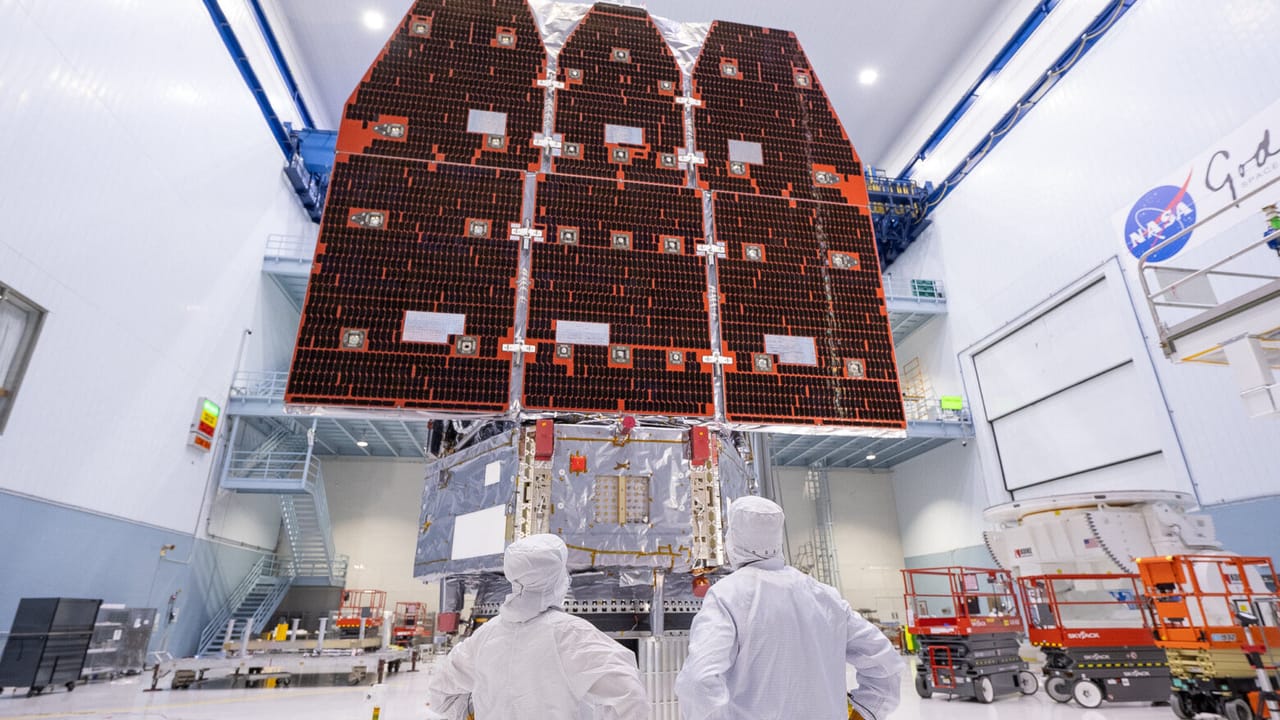
Built and tested within the meticulous clean rooms of NASA's Goddard Space Flight Center in Greenbelt, Maryland, the telescope is now poised for its final preparations before journeying to the Kennedy Space Center in Florida for its eventual launch. This ambitious project, named in honor of NASA's pioneering first chief astronomer, represents the culmination of over a decade of dedicated effort and innovation.
Also Read: Artemis II Heat Shield Triumph: NASA Confirms Performance + Quiz
A Glimpse into the Vast Unknown
The Nancy Grace Roman Space Telescope is not just another instrument; it's a paradigm shift in how we observe the cosmos. With a primary mirror significantly larger than that of the Hubble Space Telescope and an extraordinary field of view, Roman is engineered to capture vast swathes of the sky with unparalleled detail and speed. Engineers at Goddard have meticulously assembled and tested the telescope's components, ensuring its readiness for the rigorous demands of space exploration. The scale of the undertaking is immense, with project managers estimating millions of hours of work have gone into its creation.
Key Scientific Objectives
Roman's primary mission objectives are ambitious and far-reaching:
- Understanding Dark Energy and Dark Matter: These enigmatic components are believed to constitute about 95% of the universe's total mass-energy content, yet their nature remains largely unknown. Roman's ability to survey vast regions of the sky will allow scientists to measure the expansion rate of the universe and its acceleration with unprecedented precision, providing crucial clues about dark energy.
- Exoplanet Discovery: Equipped with a specialized coronagraph, Roman will be capable of blocking out the intense light of distant stars, enabling the direct imaging and study of planets orbiting them. This technology is expected to lead to the discovery of tens of thousands of new exoplanets, potentially revealing a diverse range of planetary systems beyond our own solar system.
- Testing Cosmological Models: By challenging existing theories with high-precision data, Roman aims to identify any discrepancies in our current understanding of the universe. Scientists believe that current observations hint at flaws in the standard cosmological model, and Roman's comprehensive surveys could provide the evidence needed to refine or replace these models, leading to a more accurate picture of cosmic evolution.
Also Read: Bus-Sized Asteroid 2026 HJ1: NASA Confirms Safe Earth Flyby + Quiz
Technological Prowess and Comparison
The Roman Space Telescope boasts several key technological advancements:
| Feature | Nancy Grace Roman Space Telescope | Hubble Space Telescope |
|---|---|---|
| Primary Mirror Diameter | 4.1 meters | 2.4 meters |
| Field of View | 0.28 square degrees (approximately 100 times larger than Hubble's) | Significantly smaller |
| Data Acquisition Speed | Designed for rapid, wide-field surveys | More focused on targeted observations |
| Coronagraph Instrument | Yes (for direct exoplanet imaging) | No |
| Estimated Observation Time for Similar Surveys | Weeks to months | Centuries (hypothetically) |
The telescope's coronagraph instrument, developed at NASA's Jet Propulsion Laboratory, is designed for exceptional stability, allowing for the effective suppression of starlight to reveal faint exoplanets. As NASA Administrator Jared Isaacman aptly stated, Roman will provide "the Earth the new atlas of the universe," fundamentally reshaping our cosmic perspective and expanding our search for microbial life on Mars and beyond.
Preparing for the Journey
The completion of construction marks a critical milestone, but the journey for Roman is far from over. It will undergo extensive commissioning after its launch, a process that involves meticulous testing and calibration of its instruments and systems. Mission scientists and engineers have extensively practiced launch day procedures and the crucial first weeks of operations to ensure a smooth transition into its scientific mission. NASA forecasts a potential launch as early as September.
A Legacy of Discovery
Roman builds upon the legacy of space observatories like Hubble, pushing the boundaries of scientific knowledge and technological capability. Nicola Fox, associate administrator for NASA’s Science Mission Directorate, emphasized that "Everything we do at NASA builds off the successes of what we’ve done before." Roman is expected to not only answer fundamental questions about our universe but also to pave the way for future generations of space exploration, building on discoveries like ancient water on Mars.
Quoting the renowned astronomer Carl Sagan, Lucas Paganini, the mission’s program executive, aptly summarized the anticipation surrounding Roman's future: "Somewhere, something incredible is about to be discovered." With its advanced capabilities, the Nancy Grace Roman Space Telescope is poised to usher in a new golden age of astronomical research, revealing the universe in ways we have only begun to imagine.
NASA's Roman Space Telescope - Knowledge Quiz
REPORT CARD
ATTEMPTED QUESTIONS: 0CORRECT ANSWERS: 0
WRONG ANSWERS: 0
PRACTICE REGULARLY!
Frequently Asked Questions
What is the primary mission objective of NASA's Nancy Grace Roman Space Telescope regarding dark matter and dark energy?
Roman's wide-field surveys are designed to precisely measure the universe's expansion and acceleration, which are key to understanding the behavior and influence of dark energy and dark matter.
Where was the Nancy Grace Roman Space Telescope constructed and tested?
The telescope underwent its construction and rigorous testing within the clean rooms of NASA's Goddard Space Flight Center.
What specialized instrument does the Roman Space Telescope carry to aid in the direct imaging of exoplanets?
The coronagraph is specifically designed to block out the light from a star, allowing scientists to directly observe the much fainter planets orbiting it.
How does Roman's field of view compare to Hubble's?
Roman's wide-field instrument offers a field of view roughly 100 times larger than Hubble's, enabling much faster and broader sky surveys.
Who is the Nancy Grace Roman Space Telescope named after?
The telescope is named in honor of Nancy Grace Roman, who was instrumental in the development of NASA's Great Observatories program.
According to the article, what percentage of the universe is currently observable matter and energy?
Scientists estimate that only about 5% of the universe is made up of the ordinary matter and energy we can observe, with the rest being dark matter and dark energy.
What analogy is used in the article to describe the speed of Roman's observations compared to Hubble's?
The article quotes a scientist stating that "One month of Roman observations would correspond to a century with Hubble," highlighting Roman's significantly greater efficiency in surveying large areas.
What is a potential outcome if current cosmological models are found to be incorrect by Roman's observations?
If Roman's observations contradict current models, it will prompt a revision or replacement of those models, guiding scientists towards a more accurate understanding of the universe's workings.
Where is the Roman Space Telescope expected to launch from?
After construction and testing in Maryland, the telescope is slated to be shipped to NASA's Kennedy Space Center in Florida for its launch.
What is the approximate height of the Roman Space Telescope described in the article?
The article mentions that the telescope stands just over 40 feet tall, indicating its substantial size.