
The Kolkata Weather 'See-Saw': A Perfect Storm for H1N1
An outbreak of Influenza A (including H1N1, commonly known as Swine Flu) has laid hundreds low across Kolkata. Patients are presenting with severe symptoms like high fever, debilitating body aches, and deep chest infections.
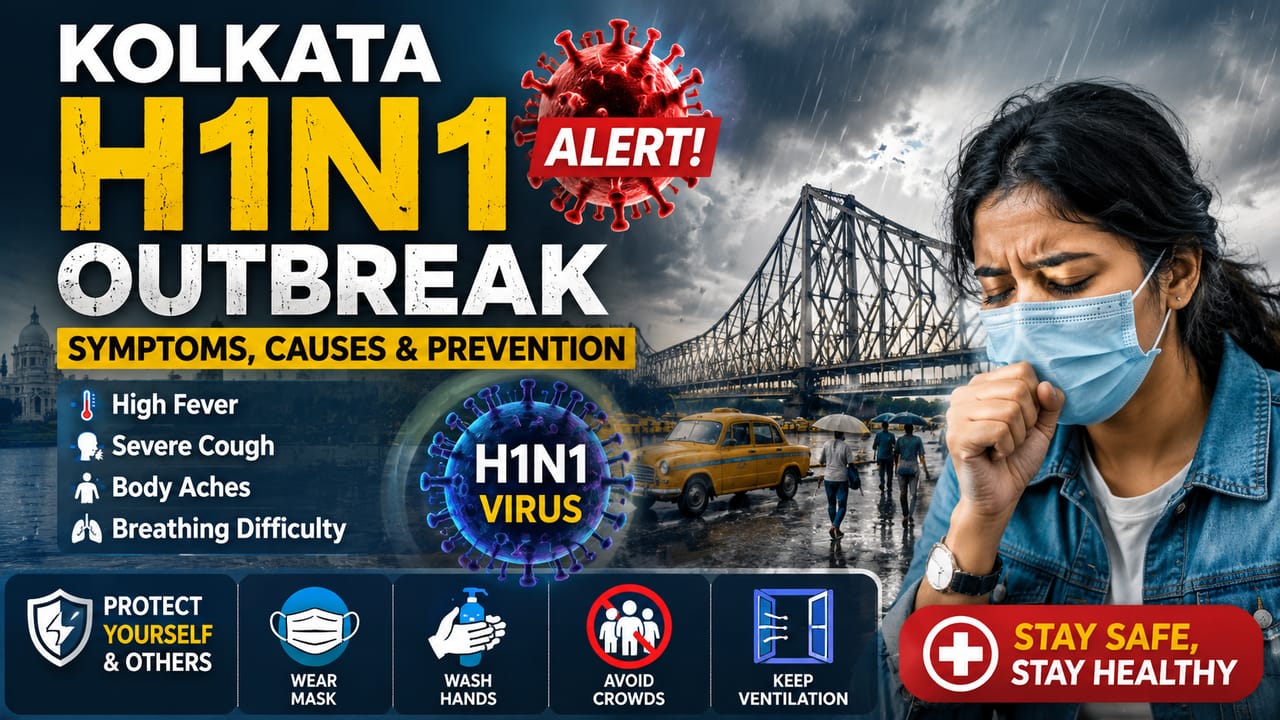
Medical experts have traced this sudden surge directly to the sharp temperature fluctuations and erratic weather changes that have gripped the city over the last fortnight.
The current weather pattern—characterized by alternating spells of heavy rainfall and scorching sunshine, accompanied by consistently high humidity levels—creates a highly favorable environment for viral transmission. Additionally, these erratic conditions force residents to spend more time in crowded, poorly ventilated, and air-conditioned spaces such as schools, offices, and public transit, accelerating person-to-person spread.
Also Read: Monsoon Viral Fever: Signs, Prevention & Treatment
Hospital Insights: Quantifying the Public Health Surge
Several major medical centers across Kolkata have reported an overwhelming surge in outpatient department (OPD) visits, along with a steady stream of hospitalizations and intensive care unit (ICU) admissions. Most patients are managed in OPDs, but high-risk demographics with pre-existing health conditions often require aggressive hospital care.
To understand the depth of this viral surge, we look at the data and insights reported by major private hospitals in the region:
| Hospital | OPD & Daily Indicators | Admission Trends & Severity | Key Medical Expert Quote/Insight |
|---|---|---|---|
| Peerless Hospital | 4–5 positive Influenza A cases daily. | 4–5 patients admitted consistently, mostly with severe weakness and comorbidities. | "Since few are tested for viral infections, the number suggests that the outbreak has affected thousands." — Dr. Bhaskar Narayan Chaudhury |
| ILS Hospitals | 50% increase in OPD volume for respiratory issues. | 20% rise in Influenza/Swine Flu admissions; 10% rise in ICU admissions due to bacterial pneumonia. | "Around 75% are Influenza cases... This is the high time to put your mask on." — Dr. Mrinmoy Mitra |
| BP Poddar Hospital | 5–7 patients daily presenting with Influenza-Like Illness (ILI). | Multiple admissions of high-risk patients over 50 years with COPD or uncontrolled diabetes. | "These conditions [erratic weather] favor viral transmission... increased time spent in enclosed, AC spaces." — Dr. Satyaki Basu |
| Charnock Hospital | Steady flow of children & young adults with respiratory symptoms. | H1N1 triggered acute respiratory distress in asthma and COPD patients. | "A persistent cough triggered by H1N1 leads to congestion and severe symptoms..." — Dr. Soumya Sengupta |
Also Read: Heatwave Health: How to Know If You Have Heat Stroke
Understanding the 'Viral Cocktail': Why Recovery is Dragging On
Physicians in Kolkata have noted a distinct change in the post-viral recovery phase. Following the devastating Adenovirus crisis in early 2023, the city's respiratory landscape changed. Rather than dealing with isolated outbreaks, doctors are now tracking a complex "cocktail" of co-circulating viruses.
Currently, Influenza A is circulating simultaneously alongside Respiratory Syncytial Virus (RSV), Rhinovirus, and Parainfluenza. Because of this structural overlap of multiple pathogens, even when a patient's primary fever subsides within 4 to 5 days, severe upper respiratory tract irritation and dry cough can linger for 4 to 6 weeks. This prolonged phase heavily impacts asthmatic patients, children, and the elderly.
| Feature | Influenza A / H1N1 (Swine Flu) | Rhinovirus (Common Cold) | Respiratory Syncytial Virus (RSV) |
|---|---|---|---|
| Onset & Fever | Sudden, high-grade fever. | Gradual, rare or very mild fever. | Gradual, low-grade fever. |
| Primary Symptoms | Severe body aches, headaches, extreme fatigue, dry cough. | Sneezing, sore throat, runny nose. | Wheezing, nagging cough, rapid breathing. |
| Risk Profile | High risk for elderly, infants, and comorbid individuals. | Generally mild; risks mainly for severe asthmatics. | Highly dangerous for infants and older adults with lung disease. |
| Duration | Acute phase: 5-7 days; recovery can take weeks. | 7-10 days. | 1-2 weeks; cough can linger. |
Symptoms to Watch and When to Seek Hospitalization
For most individuals, the illness begins with a nagging cough that rapidly escalates into lung congestion, accompanied by high fever. Key warning signs that warrant immediate medical attention include:
- High-grade fever unresponsive to standard antipyretics
- Severe breathing distress, rapid shallow breathing, or chest tightness
- Extreme weakness, dizziness, and profound fatigue
- Exacerbation of pre-existing lung conditions like COPD, asthma, or Interstitial Lung Disease (ILD)
Prevention and Pulmonologist Recommendations
Given the sharp escalation in cases, medical experts emphasize proactive defense over reactive treatment. Dr. Mrinmoy Mitra, Senior Consultant Pulmonologist, advises: "This is the high time to put your mask on, especially those with COPD, asthma, ILD, immunosuppression, the elderly, and children. In case you have severe symptoms, consult a pulmonologist immediately."
Key preventive strategies include maintaining strict hand hygiene, avoiding crowded indoor places, wearing masks in public transit, and taking yearly influenza vaccines to build robust immunity against mutating strains of Influenza A and H1N1.
Test Your Knowledge: Kolkata H1N1 Outbreak MCQ Quiz
Assess your understanding of the Kolkata H1N1 outbreak, viral transmission, and preventative guidelines with these 10 multiple-choice questions.
REPORT CARD
ATTEMPTED QUESTIONS: 0CORRECT ANSWERS: 0
WRONG ANSWERS: 0
PRACTICE REGULARLY!
Frequently Asked Questions
Why is H1N1 spreading rapidly in Kolkata?
The surge is primarily triggered by dramatic temperature fluctuations, alternating heavy rains, intense sunshine, and high humidity, which create ideal conditions for viral survival and force people into enclosed, air-conditioned spaces.
What is the viral cocktail mentioned by doctors?
Following the 2023 Adenovirus crisis, Kolkata has experienced co-circulating respiratory pathogens, where Influenza A moves alongside Rhinovirus, RSV, and Parainfluenza, leading to prolonged recovery times.
Who is at high risk for H1N1 complications?
The elderly, children, and individuals with comorbidities such as COPD, asthma, interstitial lung disease (ILD), uncontrolled diabetes, and immunosuppression are at severe risk.