
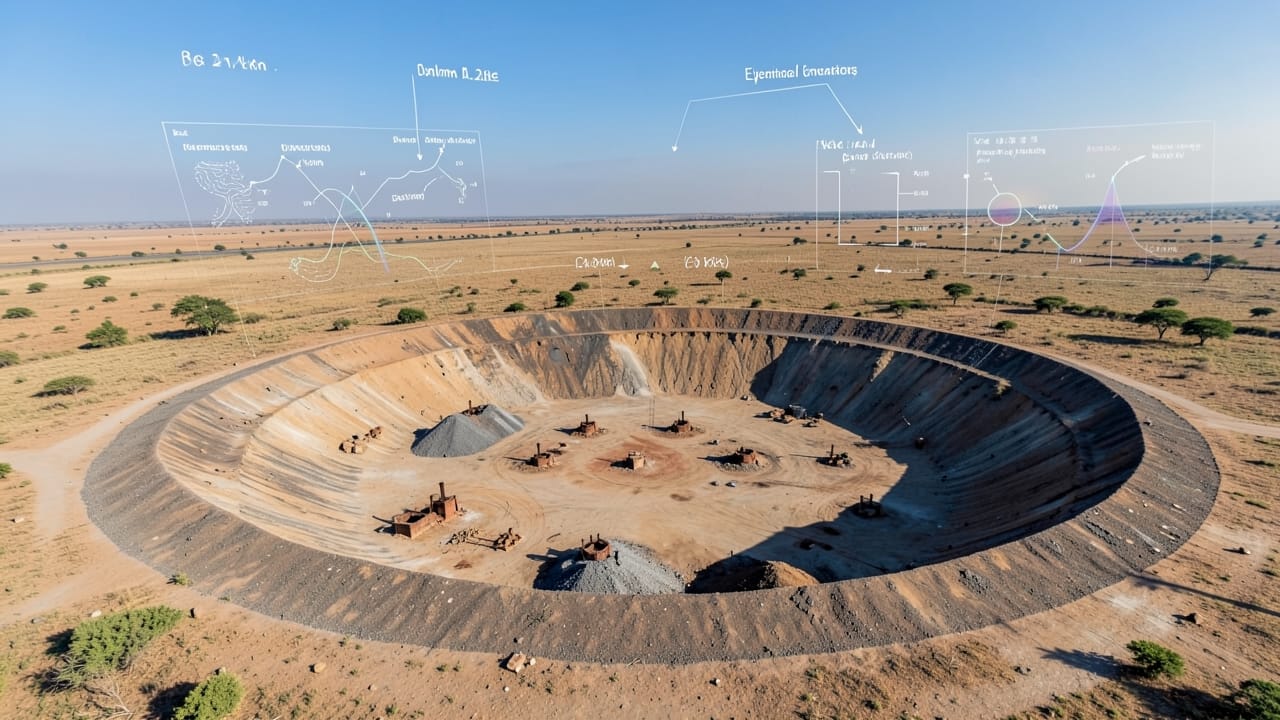
Gujarat's Mysterious 'Crater' Revealed as Ancient Harappan Smelting Hub
A geological enigma nestled in Gujarat's Banni Plains, long speculated to be a meteorite impact site, has been definitively reclassified. Recent groundbreaking research, a collaborative effort between Indian and American scientists, strongly suggests that the 1.2-km 'Luna Structure' is, in fact, an ancient Harappan civilization smelting site, dating back over 4,000 years.
This significant finding challenges decades of previous assumptions and offers a new perspective on the technological prowess of one of the world's earliest urban civilizations. The study, published in the prestigious journal Meteoritics and Planetary Science, was a joint venture involving researchers from Ahmedabad’s Physical Research Laboratory (PRL), Babasaheb Bhimrao Ambedkar University, and the US’s Scripps Institution of Oceanography.
Debunking the Meteorite Impact Theory
For years, the Luna Structure has captivated geologists and archaeologists due to its distinct circular depression and preliminary findings that hinted at extraterrestrial origins. Compelling evidence emerged in 2024 when a team from the University of Kerala reported detecting "characteristic signatures of a meteorite impact." NASA also lent support to these findings, citing the detection of rare minerals like iridium, which are typically found in meteorites and form under extreme temperatures and pressures associated with celestial impacts.
However, the latest, in-depth analysis has overturned these earlier conclusions. The research team, led by PRL scientists, meticulously studied the atomic structure and chemical composition of rock fragments collected from the Luna Structure. Their findings revealed a stark contrast to the expected signatures of a meteorite impact.
The Scientific Evidence: Slag, Not Space Rock
The core of the new study lies in the elemental analysis of over 100 glassy rock fragments from the site. Scientists employed advanced techniques such as X-ray fluorescence and mass spectrometry to pinpoint the elemental composition of these samples.
Key findings that led to the reclassification include:
- Absence of Highly Siderophile Elements (HSEs): Meteorites typically contain high concentrations of HSEs like osmium, ruthenium, iridium, rhodium, and platinum, which are rare on Earth but abundant in extraterrestrial objects. The analysis of the Luna Structure samples showed a distinct lack of these elements, particularly iridium and osmium.
- Lack of Planar Deformation Features (PDFs): These microscopic features are tell-tale signs of intense shock metamorphism caused by high-velocity impacts, such as those from meteorites. The absence of PDFs in the samples pointed away from an impact origin.
- Presence of Archaeological Slags: Instead, the chemical footprints of the rocks strongly indicated the presence of materials consistent with archaeological slags – a byproduct of ancient metal smelting. The mineral assemblage was identified as high-temperature, iron-rich slag, bearing striking similarities to residues from copper smelting operations.
The study posits that the Luna Structure materials are likely byproducts of copper smelting that occurred during the Bronze Age, a period that coincided with the flourishing Harappan Civilization.
Table: Distinguishing Features of Impact Craters vs. Smelting Sites
| Feature | Meteorite Impact Crater Signature | Harappan Smelting Site Signature (Luna Structure) |
|---|---|---|
| Key Elemental Composition | High concentrations of Highly Siderophile Elements (HSEs) like Iridium, Osmium. | Low/Absent HSEs. Presence of elements consistent with copper ore processing. |
| Microscopic Features | Presence of Planar Deformation Features (PDFs). | Absence of PDFs. Presence of glassy slag structures. |
| Material Identification | Impact breccias, shocked minerals, potential meteorite fragments. | High-temperature mineral assemblage resembling archaeological slags. |
| Formation Process | High-velocity impact of an extraterrestrial object. | High-temperature smelting processes by human activity (copper extraction). |
Technological Marvels of the Harappan Era
This reinterpretation not only corrects a geological misconception but also sheds light on the sophisticated industrial capabilities of the Harappan people. The scale and nature of the Luna Structure suggest that the inhabitants of this region possessed advanced knowledge of metallurgy and high-temperature processes for extracting and working with metals, particularly copper, which was a cornerstone of Bronze Age technology.
The study concludes unequivocally: "Considering the new evidence, the Luna Structure of western India is not a meteorite impact crater." Instead, it stands as a testament to the ingenuity and industrial achievements of the ancient Harappan civilization, adding another layer to our understanding of this remarkable culture.
Harappan Smelting Site Quiz: Test Your Knowledge!
REPORT CARD
ATTEMPTED QUESTIONS: 0CORRECT ANSWERS: 0
WRONG ANSWERS: 0
PRACTICE REGULARLY!
Frequently Asked Questions
What was the Luna Structure in Gujarat previously thought to be?
The Luna Structure, a 1.2-km feature in Gujarat's Banni Plains, was previously believed by many scientists to be a meteorite impact crater, potentially formed over 4,000 years ago.
What is the new scientific consensus on the Luna Structure?
A recent study involving Indian and US scientists has reclassified the Luna Structure as an ancient Harappan civilization smelting site, likely used for copper production, rather than a meteorite impact crater.
What evidence supports the claim that the Luna Structure is a smelting site?
The evidence includes the absence of characteristic meteorite impact signatures like Highly Siderophile Elements (HSEs) and Planar Deformation Features (PDFs), and the presence of mineral assemblages consistent with archaeological slags from high-temperature metal smelting.
Which Harappan-era metal is suggested to have been smelted at this site?
The study suggests that copper smelting was likely carried out at the Luna Structure site, given the composition of the identified slags.
What technological advancements of the Harappan Civilization does this finding highlight?
It highlights the sophisticated metallurgical knowledge and advanced high-temperature industrial processes employed by the Harappan people during the Bronze Age.