
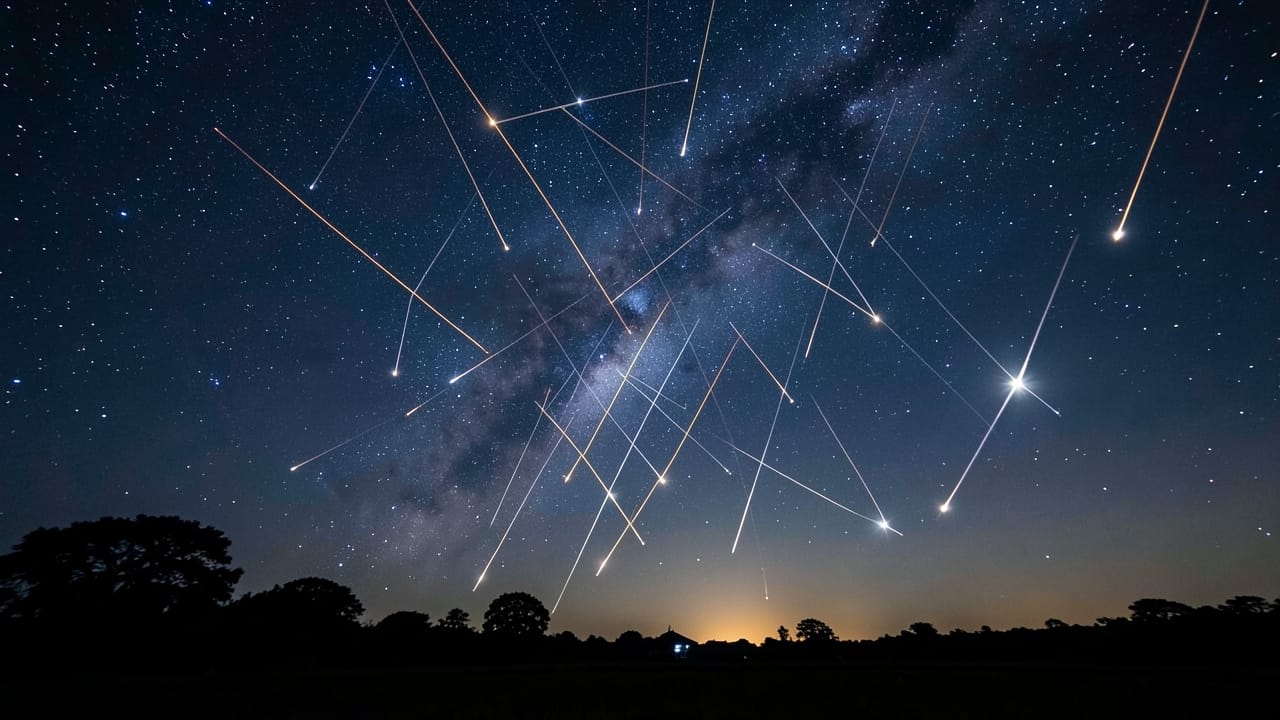
Lyrid Meteor Shower: A Celestial Spectacle Not to Be Missed
The Lyrid meteor shower, one of the oldest recorded meteor showers, graces our night sky annually, offering a breathtaking display of shooting stars. Known for its bright fireballs, the Lyrid shower is a beloved event for astronomers and stargazers alike.
What are the Lyrids?
The Lyrid meteor shower occurs when the Earth passes through a trail of debris left behind by the comet C/1861 G1 (Thatcher). This ancient comet, discovered in 1861, sheds dust and ice particles along its orbital path. As these particles enter Earth's atmosphere at high speeds, they burn up, creating the dazzling streaks of light we call meteors or shooting stars.
The radiant point of the Lyrid shower, the apparent origin of the meteors in the sky, is located in the constellation Lyra, the harp. This is how the shower gets its name.
When to Watch the Lyrid Meteor Shower in India
The Lyrid meteor shower typically peaks between April 21st and April 22nd each year. While the shower can be observed for several days before and after the peak, the most intense activity is during this specific window.
For viewers in India, the best time to watch the Lyrid meteor shower will be in the pre-dawn hours, after midnight and before sunrise. The ideal viewing period often occurs between 2 AM and sunrise on the night of the peak. This is when the radiant point in Lyra will be highest in the sky, maximizing the number of visible meteors.
Also Read: Bus-Sized Asteroid 2026 HJ1: NASA Confirms Safe Earth Flyby + Quiz
Tips for the Best Viewing Experience
To make the most of this celestial event, follow these tips:
- Find a Dark Location: Light pollution from cities can significantly obscure the view. Travel to a rural area or a place away from bright lights.
- Allow Your Eyes to Adjust: Give your eyes at least 20-30 minutes to adapt to the darkness. Avoid looking at bright screens during this time.
- Get Comfortable: Lie down on a blanket or recline in a chair to look up at the sky. This will help you stay comfortable for extended viewing periods.
- Be Patient: Meteor showers are unpredictable. While the peak offers the best chances, patience is key to spotting these fleeting celestial visitors.
- Check the Weather: Clear skies are essential. Monitor the weather forecast for your viewing location.
Understanding Meteor Shower Activity
The number of meteors visible during a shower can vary significantly year by year. Factors influencing this include:
| Factor | Impact on Visibility |
|---|---|
| Earth's Position in Debris Trail | Passing through denser parts of the comet's trail results in more meteors. |
| Moon Phase | A bright moon can wash out fainter meteors, reducing visibility. A new moon or crescent moon is ideal. |
| Atmospheric Conditions | Clear, dark skies are paramount for optimal viewing. |
Also Read: How Long to Reach the Moon? Artemis 2 Travel Time
The Lyrids: A Glimpse into Cosmic History
The Lyrids have been observed for over 2,600 years, making them one of the oldest known meteor showers. Their consistent appearance provides a tangible link to the vastness of space and our place within it.
While the Lyrids typically produce around 10-20 meteors per hour at their peak under ideal conditions, occasional outbursts can significantly increase this number. These outbursts are rare but spectacular, offering a heightened viewing experience.
So, mark your calendars and prepare for a magical night under the stars. The Lyrid meteor shower offers a fantastic opportunity to connect with the cosmos and witness the beauty of our universe firsthand.
Frequently Asked Questions
When is the Lyrid meteor shower peak?
The Lyrid meteor shower typically peaks between April 21st and April 22nd each year.
What is the best time to watch the Lyrids from India?
For viewers in India, the best time to watch is in the pre-dawn hours, after midnight and before sunrise, particularly between 2 AM and sunrise on the night of the peak.
What causes the Lyrid meteor shower?
The Lyrid meteor shower is caused by Earth passing through a trail of debris left by the comet C/1861 G1 (Thatcher). As these particles enter the atmosphere, they burn up, creating meteors.
How many meteors can I expect to see during the Lyrids?
Under ideal conditions, the Lyrids typically produce around 10-20 meteors per hour at their peak. However, this can vary, and rare outbursts can produce more.