
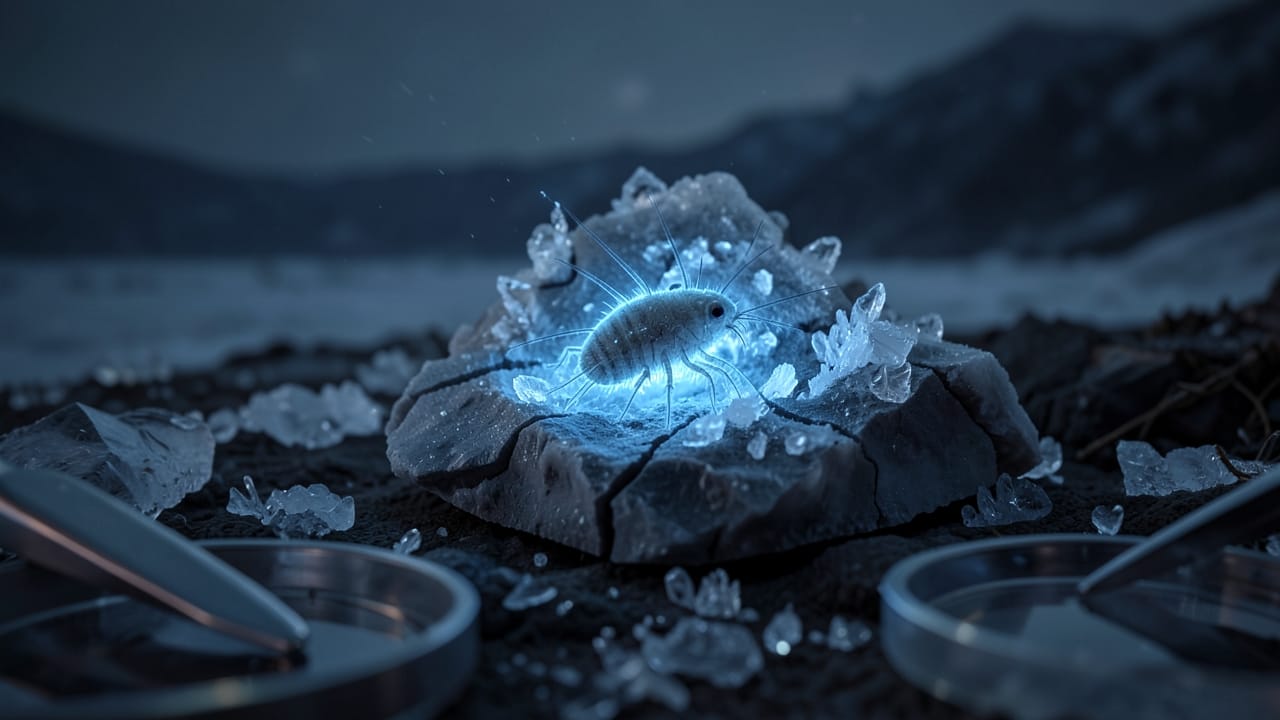
Ancient Life Awakens: 24,000-Year-Old "Zombie" Worm Revived from Siberian Permafrost
In a remarkable scientific feat, researchers have successfully revived a microscopic, multicellular animal, a rotifer, that had been frozen in the Siberian permafrost for an astonishing 24,000 years. This groundbreaking discovery, detailed in the journal Current Biology, provides the most compelling evidence to date that complex animals can endure millennia in a state of suspended animation, also known as cryptobiosis.
Cryptobiosis: A Biological Marvel
Cryptobiosis is a state of extreme inactivity in an organism that allows it to survive environmental conditions that would otherwise be lethal. Metabolism slows to an almost undetectable level, enabling the organism to withstand extreme temperatures, dehydration, and radiation. While simpler, single-celled organisms like bacteria have been revived from ancient ice before, the successful resuscitation of a multicellular animal like the rotifer marks a significant advancement in our understanding of cryopreservation and the resilience of life.
Also Read: Evolution's Toolkit: Co-opting Development for Diversity
The rotifer, a small invertebrate, was retrieved from a permafrost sample in the Kolyma River region of Siberia. Upon careful thawing under controlled laboratory conditions, the ancient creature not only showed signs of life, beginning to move and function, but also astonishingly began to reproduce asexually, creating a new generation of rotifers.
"Our report is the hardest proof as of today that multicellular animals could withstand tens of thousands of years in cryptobiosis, the state of almost completely arrested metabolism," stated lead researcher Stas Malavin. This finding challenges previous assumptions about the fragility of complex organisms when subjected to long-term freezing.
Implications for Cryopreservation and Permafrost Research
The ability of such an ancient multicellular organism to survive and reproduce has profound implications. It fuels scientific curiosity about the potential for long-term cryopreservation of more complex organisms, a concept often explored in science fiction. Understanding the mechanisms behind the rotifer's survival could unlock new avenues for preserving biological materials and potentially even organs for transplantation in the future.
Historical Context: Life in the Late Pleistocene
The rotifer's frozen slumber began during the Late Pleistocene epoch, a period characterized by the presence of megafauna such as woolly mammoths and saber-toothed tigers. Its revival in the year 2026 connects us directly to a world vastly different from our own, offering a tangible link to prehistoric life.
The Other Side of the Thaw: Risks of Ancient Microbes
While the revival of the rotifer is a testament to life's tenacity, it also serves as a stark reminder of potential risks associated with thawing permafrost. Ancient microbes, including viruses and bacteria, are also preserved within these icy vaults. These simpler organisms are often more easily revived than complex multicellular life. As global temperatures rise and permafrost melts, there is a growing concern that these ancient pathogens could be released, potentially posing new health threats to humans and ecosystems, even if they haven't yet caused widespread issues.
Also Read: Microbial Life on Mars? New Study Reveals Survival Secrets
Scientists emphasize the critical need for continued research and careful monitoring of permafrost environments. Understanding the biological agents that may be released as the ice thaws is paramount to preventing future outbreaks and ensuring public health.
| Organism Type | Approximate Age | Complexity | Survival Mechanism |
|---|---|---|---|
| Bacteria | Up to millions of years | Single-celled | Spore formation, cryptobiosis |
| Viruses | Tens of thousands of years | Acellular (non-cellular) | Inert particles, potential for reactivation |
| Rotifer (Multicellular Animal) | 24,000 years | Multicellular | Cryptobiosis (anhydrobiosis) |
This discovery underscores the dynamic nature of our planet's frozen reserves and the potential for ancient life to re-emerge, bringing with it both scientific marvels and potential challenges.
Frequently Asked Questions
What is a rotifer?
A rotifer is a microscopic, multicellular animal belonging to the phylum Rotifera. They are commonly found in freshwater environments and are known for their characteristic crown of cilia, which they use for locomotion and feeding.
What is cryptobiosis?
Cryptobiosis is a state of suspended animation where an organism's metabolic activity is reduced to an imperceptible level, allowing it to survive extreme environmental conditions such as freezing, dehydration, or lack of oxygen. This state can persist for extended periods, sometimes thousands of years.
How old was the rotifer revived from the permafrost?
The rotifer revived from the Siberian permafrost was approximately 24,000 years old, dating back to the Late Pleistocene epoch.
What are the potential risks of thawing permafrost?
Thawing permafrost can release ancient microbes, including viruses and bacteria, that have been preserved for thousands of years. While some may be harmless, others could potentially be infectious and pose new health risks to humans and ecosystems, especially as the climate continues to warm.