
Yellowstone Volcano: New Study Ignites Eruption Fears, Scientists Urge Calm
Recent scientific findings suggesting that magma beneath the iconic Yellowstone Caldera might be closer to the surface than previously understood have sent ripples of concern across the internet. However, leading geologists and volcanologists are urging the public to remain calm, emphasizing that these new insights do not indicate an imminent eruption.
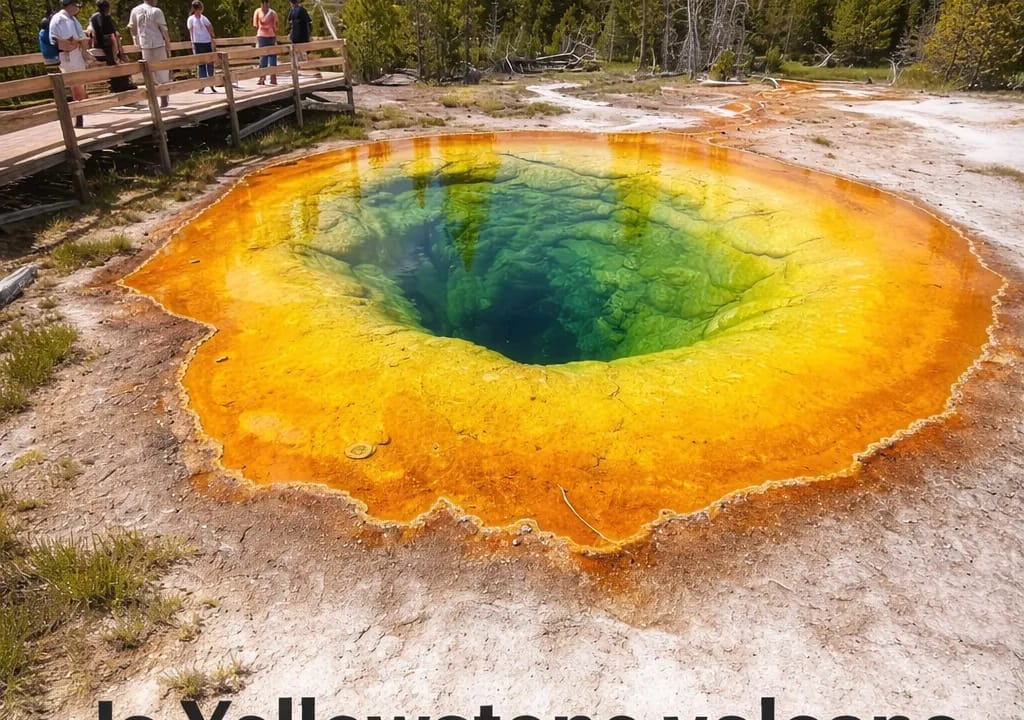
Understanding the New Research
A groundbreaking study, published in the prestigious journal Science by researchers from the Chinese Academy of Sciences, delves into the complex mechanisms by which supervolcanoes generate and store vast quantities of magma. Traditionally, the scientific community operated under the assumption that supervolcanoes like Yellowstone are fed by large, deep-seated magma chambers. These chambers were thought to gradually fill, with pressure accumulating over millennia until a critical threshold is reached, inevitably leading to a cataclysmic eruption.
The new research, however, proposes a potentially different model. By utilizing a sophisticated three-dimensional geodynamic model of the North American continent, the scientists suggest that magma might instead accumulate in shallower regions within the Earth's crust. These areas, often referred to as "magma mush" zones, are characterized by partially molten rock rather than entirely liquid magma. This implies that molten material could be more widely dispersed and accessible beneath the surface than previously theorized, potentially necessitating a revision of our understanding of volcanic plumbing systems.
What is a Supervolcano and Why Does Yellowstone Matter?
The Yellowstone Caldera is classified as a supervolcano, a geological phenomenon capable of unleashing eruptions on a scale vastly exceeding that of typical volcanoes. The United States Geological Survey (USGS) records indicate that Yellowstone has experienced three such colossal eruptions in the past 2.1 million years. These events are characterized by the ejection of immense volumes of ash, gas, and lava, which can have devastating global consequences, including significant disruptions to climate patterns and widespread agricultural failure.
The potential impact of another supereruption today is staggering. Scientists estimate that a similar event could blanket vast swathes of North America in ash, rendering large areas uninhabitable and causing unprecedented economic and social disruption.
Is an Eruption Imminent? Scientists Weigh In
Despite the sensationalized headlines and public anxiety, experts affiliated with the USGS have consistently stated that Yellowstone is not overdue for an eruption. Crucially, there are no current indicators of heightened volcanic activity that would signal an impending event. While the average time between Yellowstone's major past eruptions is estimated to be around 700,000 years, scientists stress that these averages are statistical observations, not deterministic predictions.
As the USGS aptly puts it, "Volcanoes do not follow predictable schedules." The most recent significant volcanic activity at Yellowstone was a relatively minor lava flow approximately 70,000 years ago, a mere geological blink of an eye compared to the timescales of supereruptions.
Key Facts About Yellowstone Volcanic Activity
| Indicator | Current Status | Significance |
|---|---|---|
| Seismic Activity | Normal background levels | Elevated earthquake swarms could signal magma movement. |
| Ground Deformation | Subtle uplift and subsidence typical of geothermal activity | Significant and rapid ground swelling would be a major concern. |
| Gas Emissions | Typical levels of volcanic gases detected | Sudden changes in gas composition or volume could indicate shallowing magma. |
| Temperature Anomalies | Localized hot spots consistent with geothermal features | Widespread and significant temperature increases would be alarming. |
The Enduring Significance of the Study
Even in the absence of immediate danger, the findings of this new study hold considerable scientific value. By suggesting that magma systems are potentially more dynamic and widespread than previously believed, the research could influence the methodologies scientists employ in monitoring volcanic activity and assessing long-term geological risks. It underscores the intricate nature of Earth's internal processes, particularly the complex interplay between the rigid lithosphere and the deformable asthenosphere, where heat transfer fuels volcanic phenomena.
The Bigger Picture: Science, Context, and Public Perception
The renewed public interest in Yellowstone's potential for eruption highlights a common phenomenon: scientific discoveries, when divorced from their broader context, can often ignite unwarranted alarm. While the concept of a supervolcano eruption undoubtedly captures the public imagination due to its dramatic potential, current comprehensive monitoring systems maintained by the USGS show no signs that would suggest an impending event. These systems meticulously track seismic activity, ground deformation, and gas emissions, providing a robust framework for understanding the volcano's state.
For the foreseeable future, scientists maintain that Yellowstone remains stable. Ongoing research continues to refine our understanding of the complex geological forces at play beneath the park, ensuring that our preparedness and knowledge evolve alongside scientific discovery.
Test Your Knowledge: Yellowstone Volcano Quiz
REPORT CARD
ATTEMPTED QUESTIONS: 0CORRECT ANSWERS: 0
WRONG ANSWERS: 0
PRACTICE REGULARLY!
Frequently Asked Questions
Is the Yellowstone volcano showing signs of an imminent eruption?
No, scientists from the United States Geological Survey (USGS) state that Yellowstone is not overdue for an eruption and does not currently show signs of heightened volcanic activity. While a new study suggests magma might be shallower than previously thought, this does not equate to an imminent eruption.
What did the new study about Yellowstone's magma system find?
The study, published in 'Science' by researchers from the Chinese Academy of Sciences, proposes that magma may accumulate in shallower 'magma mush' zones within the Earth's crust, rather than solely in large, deep magma chambers.
What is a 'supervolcano' like Yellowstone capable of?
A supervolcano is capable of producing eruptions far larger than typical volcanic events. Such eruptions can eject massive amounts of ash, gas, and lava, potentially disrupting global climate patterns and agriculture.
How often has Yellowstone erupted in major events?
Yellowstone has experienced three major eruptions in the past 2.1 million years. The average time between these events is estimated at around 700,000 years, but scientists emphasize that volcanoes do not follow predictable schedules.
Why are scientists urging caution despite the new study's findings?
Scientists urge caution to prevent public alarm based on sensationalized headlines. While the study offers new insights into magma systems, current comprehensive monitoring by the USGS shows no signs of an impending eruption.