
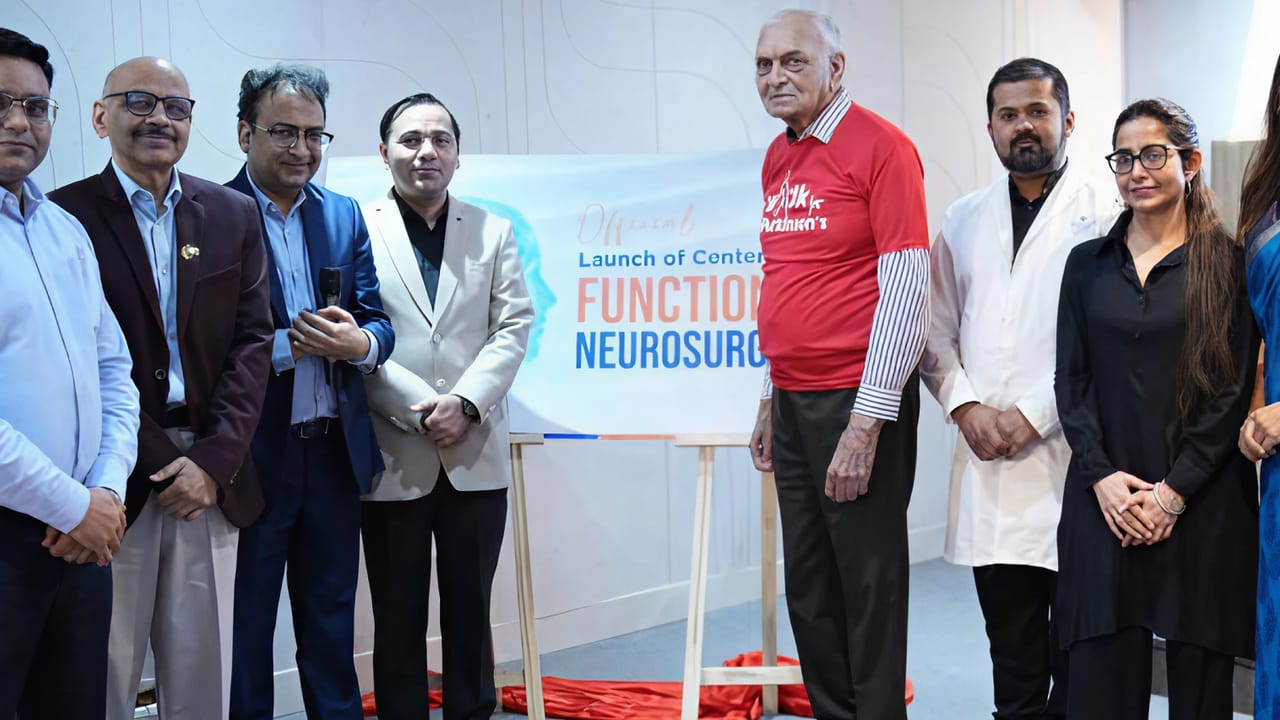
Marengo Asia Hospitals Pioneers Parkinson's Care with New Functional Neurosurgery Center
Marengo Asia Hospitals, a leading healthcare institution in Gurugram, has announced a significant advancement in neurological care with the launch of its dedicated Center for Functional Neurosurgery. This strategic expansion aims to provide enhanced access to cutting-edge treatments for patients suffering from Parkinson's disease and other movement disorders.
The inauguration of the center coincided with World Parkinson's Day, a global initiative focused on raising awareness about early diagnosis, diverse treatment avenues, and comprehensive long-term management strategies for individuals affected by Parkinson's.
Also Read: New Disease Symptoms: Latest Update You Must Know (2026)
Deep Brain Stimulation (DBS): A Beacon of Hope for Advanced Parkinson's
At the heart of this new center's offerings is Deep Brain Stimulation (DBS), a revolutionary surgical procedure designed to manage the complex symptoms of advanced Parkinson's disease. DBS represents a paradigm shift in improving treatment outcomes, especially for patients experiencing progressive motor impairments that are no longer adequately controlled by medication alone.
"DBS represents a shift in treatment outcomes, particularly for patients with progressive motor symptoms," stated Dr. Praveen Gupta, Chairman, MAIINS, Marengo Asia Hospitals. "Clinical data indicate that 70–75% of appropriately selected patients experience significant improvement in motor function and reduced dependence on medication."
The DBS procedure involves the precise implantation of electrodes into specific regions of the brain. These electrodes deliver controlled electrical impulses to regulate abnormal neural activity that underlies the motor symptoms of Parkinson's, such as tremors, rigidity, and slowness of movement.
The DBS Procedure and Patient Outcomes
| Aspect | Details |
|---|---|
| Electrode Placement | Specific brain regions identified through advanced imaging. |
| Mechanism | Electrical impulses regulate abnormal neural activity. |
| Patient Improvement (Clinical Data) | 70-75% show significant improvement in motor function. |
| Medication Dependence | Reduced need for dopaminergic medications. |
| Minimally Invasive Nature | Utilizes detailed MRI scans for planning. |
| Recovery | Early improvements in mobility often seen post-activation. |
Dr. Himanshu Champaneri, Clinical Director and Chief Functional & Epilepsy Neurosurgeon at Marengo Asia Hospitals, elaborated on the meticulous planning involved. "DBS procedures are planned using detailed imaging techniques such as MRI scans," he explained. "The surgery is minimally invasive, with patients often experiencing early improvements in mobility after device activation and adjustment." This implies a relatively swift recovery and a tangible impact on patients' daily lives.
Holistic Approach: Integrating Movement Therapy and Multidisciplinary Care
Beyond surgical interventions, the center is championing a holistic approach to Parkinson's management. Recognizing the crucial role of physical activity and rehabilitation, Marengo Asia Hospitals has also introduced a specialized Movement-Based Dance Therapy Program. This innovative program is meticulously designed to leverage the power of rhythmic movement training to enhance balance, coordination, posture, and gait – key areas often compromised by Parkinson's disease.
The structured dance therapy aims to:
- Support long-term mobility
- Mitigate functional decline associated with disease progression
- Promote neuroplasticity through regular motor engagement
- Improve overall stability and reduce the risk of falls
- Help patients maintain functional independence for extended periods
Experts emphasize that movement-based therapies are fundamental to neurological rehabilitation. The underlying principle is to stimulate the brain's ability to adapt and reorganize itself (neuroplasticity), thereby compensating for damaged areas and improving motor control.
Also Read: Vitamin D Deficiency: Hidden Dangers You Must Know for a Healthy Life
A Multidisciplinary Model for Comprehensive Well-being
The comprehensive care model at Marengo Asia Hospitals extends beyond neurosurgery and physical therapy. It encompasses a collaborative approach involving a team of specialists, including:
- Neurologists
- Physiotherapists
- Movement Therapists
- Psychologists
- Dietitians
This integrated team works in synergy to address the multifaceted needs of Parkinson's patients. The program also prioritizes psychological counseling and nutritional guidance, underscoring the importance of mental health and optimal nutrition in supporting overall patient well-being and enhancing treatment efficacy.
Enhancing Awareness and Caregiver Support
Harpreet Singh, Facility Director at Marengo Asia Hospitals, Gurugram, highlighted the broader objectives of this initiative. "The initiative is aimed at improving awareness of neurological disorders and expanding access to advanced treatment methods," he stated. "The program also focuses on educating caregivers to better support long-term disease management." Empowering caregivers is a vital component, ensuring that patients receive consistent and informed support in their daily lives.
The launch of the Center for Functional Neurosurgery signifies Marengo Asia Hospitals' commitment to advancing neurological care and providing hope and improved quality of life for individuals battling Parkinson's disease. This move positions the hospital as a key center for specialized neurosurgical treatments in the region.
Frequently Asked Questions
What is the new Center for Functional Neurosurgery at Marengo Asia Hospitals focused on?
The new Center for Functional Neurosurgery at Marengo Asia Hospitals is primarily focused on enhancing care for Parkinson's disease patients. It aims to improve access to advanced treatments like Deep Brain Stimulation (DBS) and offers integrated programs including movement therapy.
What is Deep Brain Stimulation (DBS) and how does it help Parkinson's patients?
Deep Brain Stimulation (DBS) is a surgical treatment for advanced Parkinson's disease. It involves implanting electrodes in specific brain regions to deliver electrical impulses that regulate abnormal neural activity. Clinical data suggests it can lead to significant improvement in motor function and reduce reliance on medication for 70-75% of appropriately selected patients.
Besides surgery, what other therapies are offered for Parkinson's care at the center?
Marengo Asia Hospitals has also introduced a Movement-Based Dance Therapy Program, which focuses on rhythmic training to improve balance, coordination, posture, and gait. The hospital follows a multidisciplinary care model involving neurologists, physiotherapists, movement therapists, psychologists, and dietitians.
What is the role of movement-based therapies in Parkinson's rehabilitation?
Movement-based therapies are crucial for neurological rehabilitation. They aim to support neuroplasticity, improve stability, reduce the risk of falls, and help patients maintain functional independence for longer durations by stimulating regular motor training.