
Parrots: More Than Just Mimics – They Actually 'Talk' to Each Other
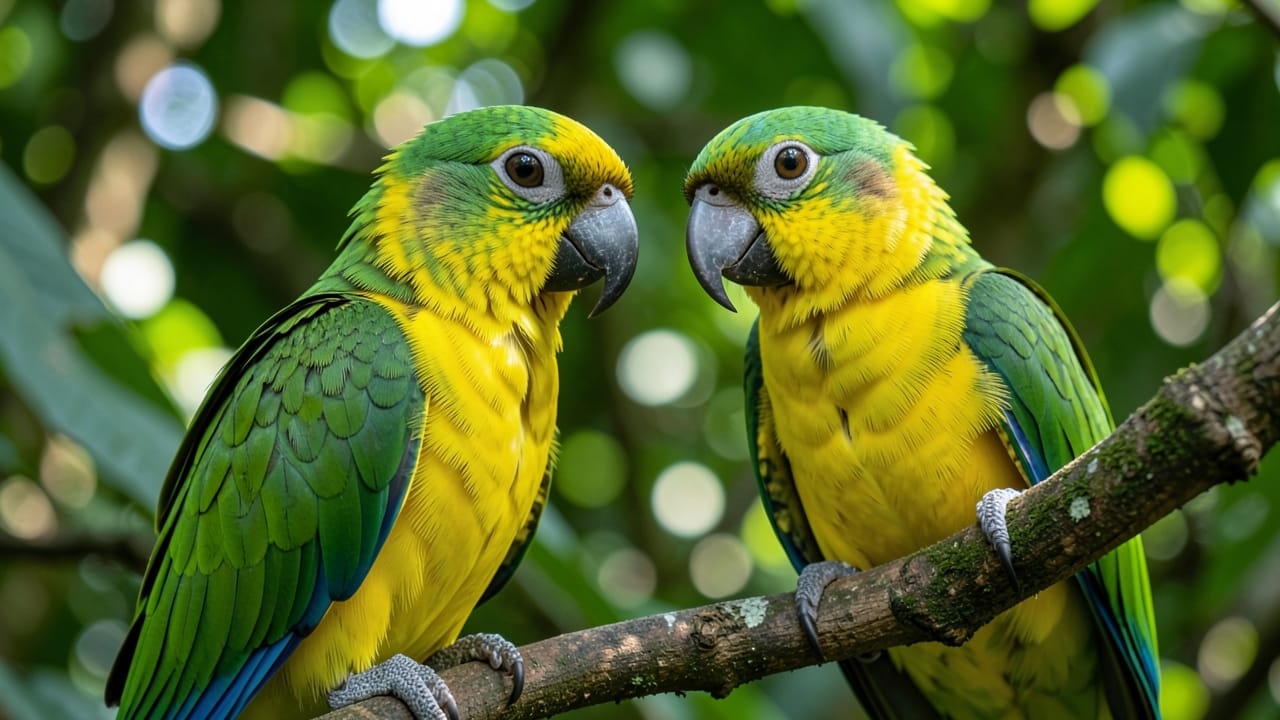
For decades, the remarkable ability of parrots to mimic human speech has captivated scientists and the public alike. However, a groundbreaking study reveals that these intelligent birds engage in a far more complex form of communication than previously understood. New research indicates that parrots don't just imitate sounds; they use sophisticated vocalizations to 'talk' to each other in structured conversations, akin to human dialogue.
The Fascinating Phenomenon of 'Warble Duets'
Scientists observing yellow-naped Amazon parrots in their natural habitat have identified a unique interactive vocal behavior termed "warble duets." These exchanges are distinguished by specific acoustic features that set them apart from simple, random vocalizations. This discovery challenges the long-held perception of animal communication as purely instinctual or imitative, suggesting a level of social interaction and meaning previously thought exclusive to humans.
The study, published in the Journal of Avian Biology, titled "Decoding parrot duets: complex communication in yellow-naped amazons," highlights that these duets are not mere random noises but demonstrate organized communication. This implies that parrots function as highly social communicators, capable of engaging in dialogues where different sounds serve as distinct communicative tools.
Vocal Learning: The Secret Behind Parrot Communication
Parrots possess a rare biological trait known as vocal learning. This extraordinary ability allows them to learn, memorize, and precisely replicate sounds from their environment, including human speech and the complex vocalizations of other parrots. This process mirrors how human infants acquire language skills.
Further research, such as the study “Pair duets in the Yellow-Naped Amazon (Amazona auropalliata): phonology and syntax,” suggests that these vocal patterns exhibit organized rules that bear a resemblance to the fundamental syntax of human language. This is supported by neurological findings indicating that some parrots have brain structures dedicated to vocalization that are remarkably similar to those found in humans.
Understanding vs. Mimicry: Do Parrots Grasp Meaning?
A significant ongoing debate among researchers centers on whether parrots truly understand the meaning behind the sounds they produce and learn, or if they are merely sophisticated mimics. While some parrots might primarily be imitating, evidence suggests that certain individuals can apply learned words and phrases in appropriate contexts. Observations have noted parrots using vocalizations to describe objects, actions, or even specific scenarios, indicating a more functional and less abstract form of communication than simple mimicry.
Parrot Communication: Wild vs. Captivity
Parrots often mimic human speech because they perceive humans as part of their social group. However, their vocalizations in the wild serve a different, vital purpose. In their natural environment, parrots use their voices to:
- Maintain social bonds within their flock.
- Recognize individual members, similar to using names.
- Organize group activities and movements.
- Evoke and convey emotions.
Observing parrots in their natural habitat provides deeper insights into their communication systems compared to studying their interactions with humans in captivity. This distinction is crucial for understanding the full spectrum of their communicative capabilities.
Why This Research Matters
Investigating parrot communication offers valuable insights into the evolution of language itself, potentially shedding light on the origins of human language. The discovery of structured vocal systems in species like parrots suggests that language development may not have been a uniquely human phenomenon but rather a gradual evolutionary process across many species.
Furthermore, understanding the cognitive abilities demonstrated by parrots underscores their intelligence and the critical importance of conservation efforts. Many parrot species, including the yellow-naped Amazon, are endangered, making the preservation of their habitats and populations essential for ongoing scientific discovery and biodiversity.
Conclusion: Parrots as Sophisticated Communicators
Parrots are proving that language-based communication is not exclusively a human trait. While their communication style differs from human language, their ability to learn, use structured calls, and engage in meaningful exchanges positions them as highly intelligent and sophisticated communicators. This ongoing research into parrot conversations continues to reveal the wonders of nature and the potential for complex communication systems to exist right above our heads in the trees.
Parrot Communication Study Quiz
REPORT CARD
ATTEMPTED QUESTIONS: 0CORRECT ANSWERS: 0
WRONG ANSWERS: 0
PRACTICE REGULARLY!
Frequently Asked Questions
Do parrots only mimic humans, or do they talk to each other?
Recent studies suggest that parrots don't just mimic humans; they engage in complex vocal exchanges with each other, often referred to as 'warble duets,' which function as a form of organized communication.
What is 'vocal learning' in parrots?
Vocal learning is a rare trait that allows parrots to learn, memorize, and precisely replicate sounds from their environment, including human speech and the vocalizations of other parrots. This ability is crucial for their communicative skills.
Can parrots understand the meaning of what they 'say'?
While some parrots may primarily mimic, research indicates that some can apply words and phrases contextually, suggesting a level of comprehension that goes beyond simple imitation. However, their understanding is not comparable to human language complexity.
What are 'warble duets' in parrots?
'Warble duets' are coordinated vocal exchanges between parrots, characterized by specific acoustic features, that scientists use to study their complex communication systems. These exchanges demonstrate organized dialogue.
Why is studying parrot communication important?
Studying parrot communication can provide insights into the evolution of language, demonstrate complex intelligence in non-human species, and highlight the importance of conservation efforts for these often-endangered birds.