
Tragic Loss: Man Dies from Undiagnosed Diabetes After Repeated GP Calls for Urgent Help Ignored
A devastating case has come to light following an inquest into the death of 30-year-old Joshua Haines, who died at his Leeds home from a severe, undiagnosed form of diabetes. Mr. Haines had made three separate calls to his General Practitioner (GP) on March 16, 2025, expressing grave concerns about his worsening health, including severe dehydration, vomiting, and slurred speech. Despite these alarming symptoms, which he himself linked to a potential diabetes diagnosis, he was advised to contact the non-emergency NHS 111 service instead of being offered an in-person consultation or an immediate referral for emergency care.
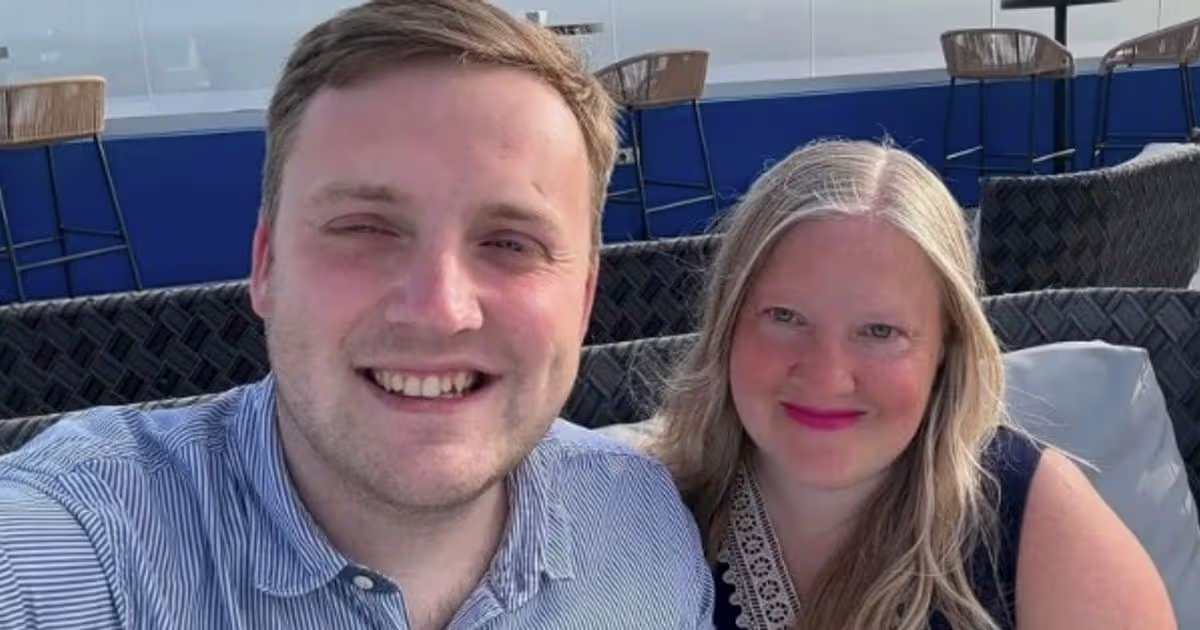
Three days later, Joshua Haines was found deceased in his home. The subsequent inquest at Wakefield Coroner's Court revealed the cause of death to be diabetic ketoacidosis (DKA), a life-threatening complication arising from a lack of insulin, often associated with undiagnosed Type 1 diabetes. The Assistant Coroner, Naomi McLoughlin, acknowledged that there were "missed opportunities" in Mr. Haines' care, suggesting that with timely intervention, he might have received the "urgent medical help" he desperately needed. However, she could not definitively state whether these failures directly caused his death.
The Inquest: A Timeline of Missed Opportunities
The inquest heard detailed evidence from various parties involved in Mr. Haines' final days. Representatives from the Yorkshire Ambulance Service indicated that had Mr. Haines' symptoms been properly escalated by the GP surgery or communicated by Mr. Haines himself to emergency services, he would likely have been classified as a Category Two emergency. This classification typically mandates an ambulance response within 40 minutes.
Senior paramedic Daniel Lawton testified that if emergency crews had attended, they would have been equipped to identify the condition, initiate crucial rehydration, and transport him to the hospital as a priority. An independent investigating doctor, reviewing the case, stated that "red flags were missed" by the Extended Access service that Mr. Haines contacted.
GP's Perspective and Reflections
Dr. Saleh Majid, the GP who spoke with Mr. Haines on three occasions, explained his initial assessment. He believed the persistent vomiting suggested a stomach bug. While diabetes was considered as a possibility, and he acknowledged it can develop suddenly, he stated he could not accurately gauge the severity of the potential condition or "how far down the line" Mr. Haines was. He did not "envisage it being at a life-threatening stage" at the time of the calls.
When questioned about potential mistakes, Dr. Majid expressed profound regret: "I could have done things differently on reflection. I have had time to learn and reflect on this tragic case. Things will be done differently." This admission underscores the critical need for continuous professional development and adherence to evolving medical protocols.
Also Read: Indigestion Warning Signs You Shouldn’t Ignore!
Family's Devastation and Call for Change
Joshua Haines' sister, Jessica Parker, shared the family's profound grief and disappointment. "We're deeply disappointed and devastated. All we want from this is for no family to go through what we've had to go through," she stated. She emphasized her belief that her brother's death was preventable and that his sudden passing has left an "unfathomable hole" in their lives.
The family's legal representative, Peter Skelton, urged the coroner to record a narrative verdict that explicitly linked the missed opportunities in care to Mr. Haines' death. He also advocated for a 'prevention of future deaths' report to highlight systemic issues and prevent similar tragedies. "The family are very serious that there have been some very serious failures of care with the most extreme of consequences: the needless death of a young patient," Skelton remarked, further questioning Dr. Majid's assessment and competency in this instance.
Coroner's Findings and Conclusion
In her concluding remarks, Assistant Coroner Naomi McLoughlin affirmed that missed opportunities were evident, specifically mentioning the lack of a face-to-face appointment and the absence of an emergency 999 call being initiated by the GP service. However, as previously stated, she could not conclusively determine if these omissions were the direct cause of Mr. Haines' death. She officially recorded that Mr. Haines died between March 16 and March 19, 2025, from diabetic ketoacidosis.
Also Read: Breakthrough: New High-Risk Heart Care Program Launched
Understanding Diabetic Ketoacidosis (DKA)
Diabetic ketoacidosis is a serious complication of diabetes that occurs when the body produces high levels of blood acids called ketones. It typically happens when there is a severe lack of insulin. Without enough insulin, the body cannot use glucose for energy, so it begins to break down fat stores for fuel instead. This process releases acids called ketones into the bloodstream. If left untreated, DKA can lead to a diabetic coma and can be fatal.
Key Symptoms of DKA to Watch For:
- Extreme thirst
- Frequent urination
- Nausea and vomiting
- Abdominal pain
- Weakness or fatigue
- Shortness of breath
- Fruity-smelling breath
- Confusion or difficulty concentrating
- Flushed face
The Importance of Urgent Medical Assessment
This tragic case highlights a critical issue within healthcare systems: the accurate and timely assessment of potentially life-threatening conditions. While GPs and primary care services are the first line of defense, failing to recognize or escalate severe symptoms can have catastrophic consequences. The case raises important questions about:
- Triage Protocols: Are current triage systems adequately equipped to handle potentially rapidly deteriorating conditions presented telephonically?
- GP Training and Awareness: Is there sufficient emphasis on recognizing the subtle, yet critical, early signs of conditions like DKA, especially in patients with no prior history?
- Access to In-Person Care: What are the implications of reduced direct access to GPs and the reliance on non-emergency lines for urgent concerns?
- Systemic Failures: How can healthcare providers ensure that patient-reported severe symptoms are always taken with the utmost seriousness, regardless of the perceived likelihood of a specific diagnosis?
Joshua Haines, described as a "rising star" surveyor with "exceptional ability," was on a promising career path. His untimely death serves as a stark reminder of the fragility of life and the paramount importance of accessible, responsive, and effective healthcare.
Test Your Knowledge: Inquest and Diabetes MCQs
REPORT CARD
ATTEMPTED QUESTIONS: 0CORRECT ANSWERS: 0
WRONG ANSWERS: 0
PRACTICE REGULARLY!